
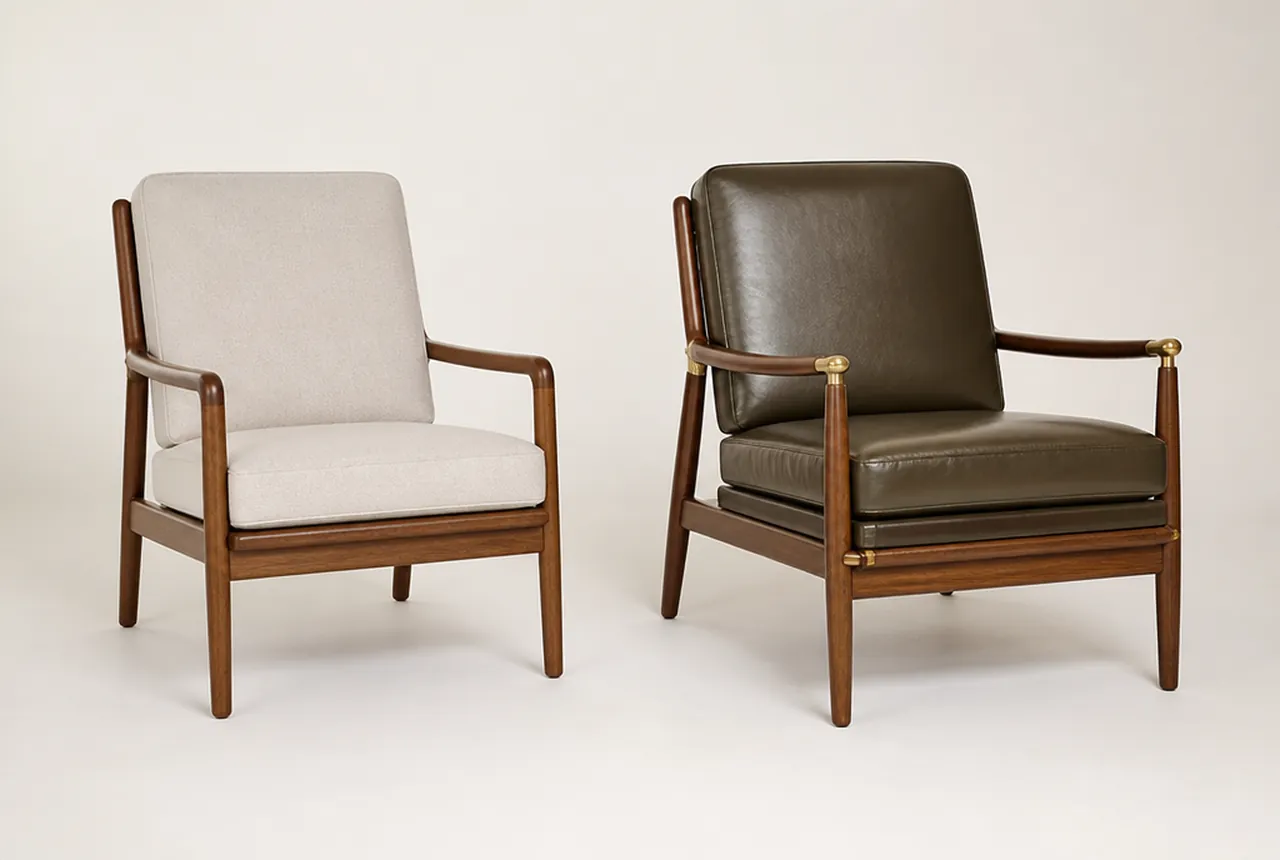
Two lounge chairs can stand side by side, look almost identical, and represent completely different commercial decisions. One was drawn for the project, prototyped, approved and produced against a purchase order. The other was selected from a published programme, ordered from stock and shipped within weeks. FF&E, meaning furniture, fixtures and equipment, is bought both ways on nearly every hospitality project, and the mistake owners make is treating the choice as a quality question. It is a fit, schedule and quantity question, and the right answer differs item by item within the same package. This page sits alongside FF&E lead times explained, contract grade furniture for hospitality and FF&E installation and logistics.
Four routes, not two
The trade talks about custom and quick ship as a binary. In practice there are four routes, with four different lead times and risk profiles.

Pure custom. Designed for the project, engineered to a shop drawing, prototyped, approved and produced. Nothing exists until the order is placed, and dimensions, materials, finish, hardware and construction are all specified by the buyer.
Modified standard. An existing factory model altered for the project in dimension, base, arm detail or seat height. The engineering largely exists, so the lead time is shorter, but a first article is still normally required.
Standard model, finish to order. The catalogue model is unchanged, with the finish and cover selected for the project. This is the most common route on hospitality seating and it is frequently mislabelled as custom.
Stock quick ship. A model held in finished inventory in a defined set of finishes and covers. Nothing is made for the order at all. The programme is the product.
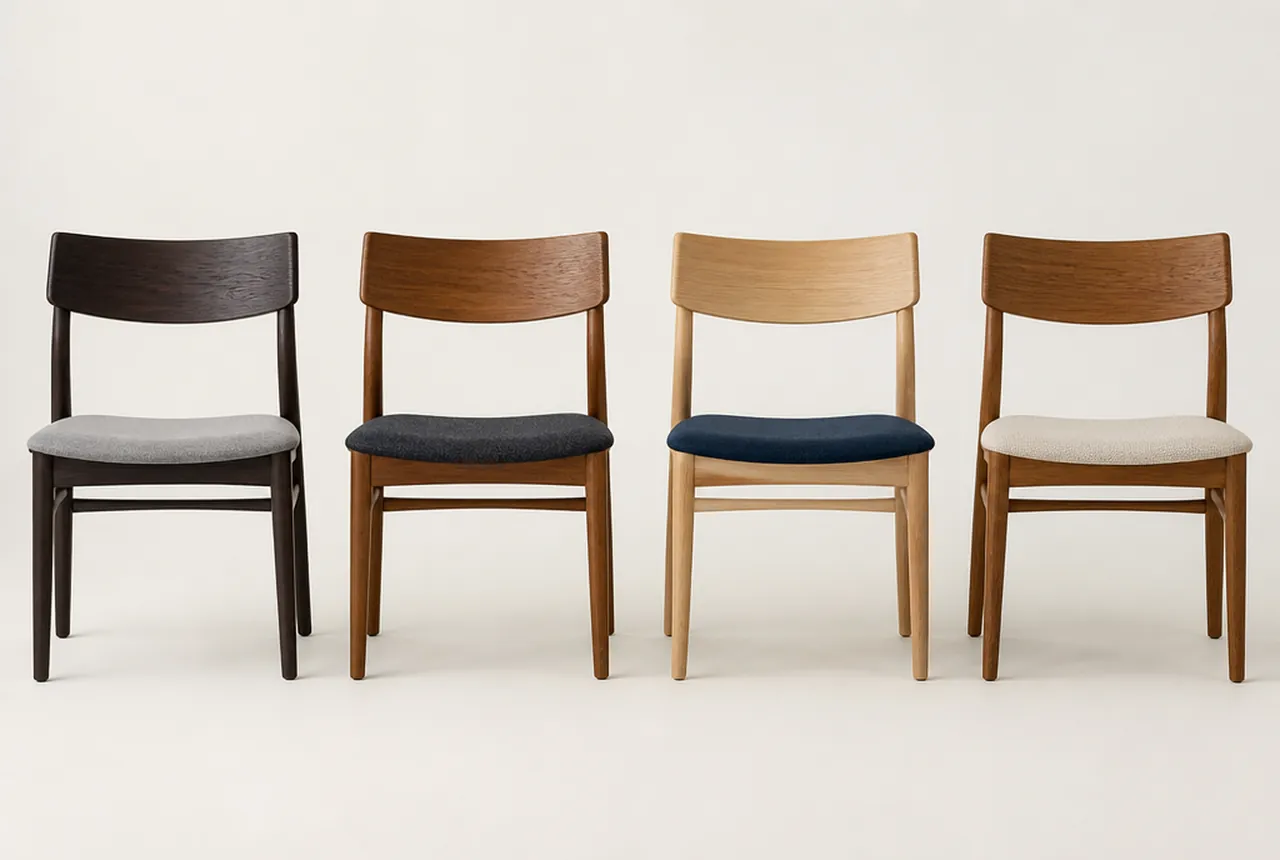
Naming the route for each line item in the specification prevents the most common bid error on a hotel package, which is comparing a quick ship price against a custom price and concluding that the custom vendor is expensive.
What custom actually buys
Custom buys four things and it is worth being precise about them, because only two of them are usually decisive.

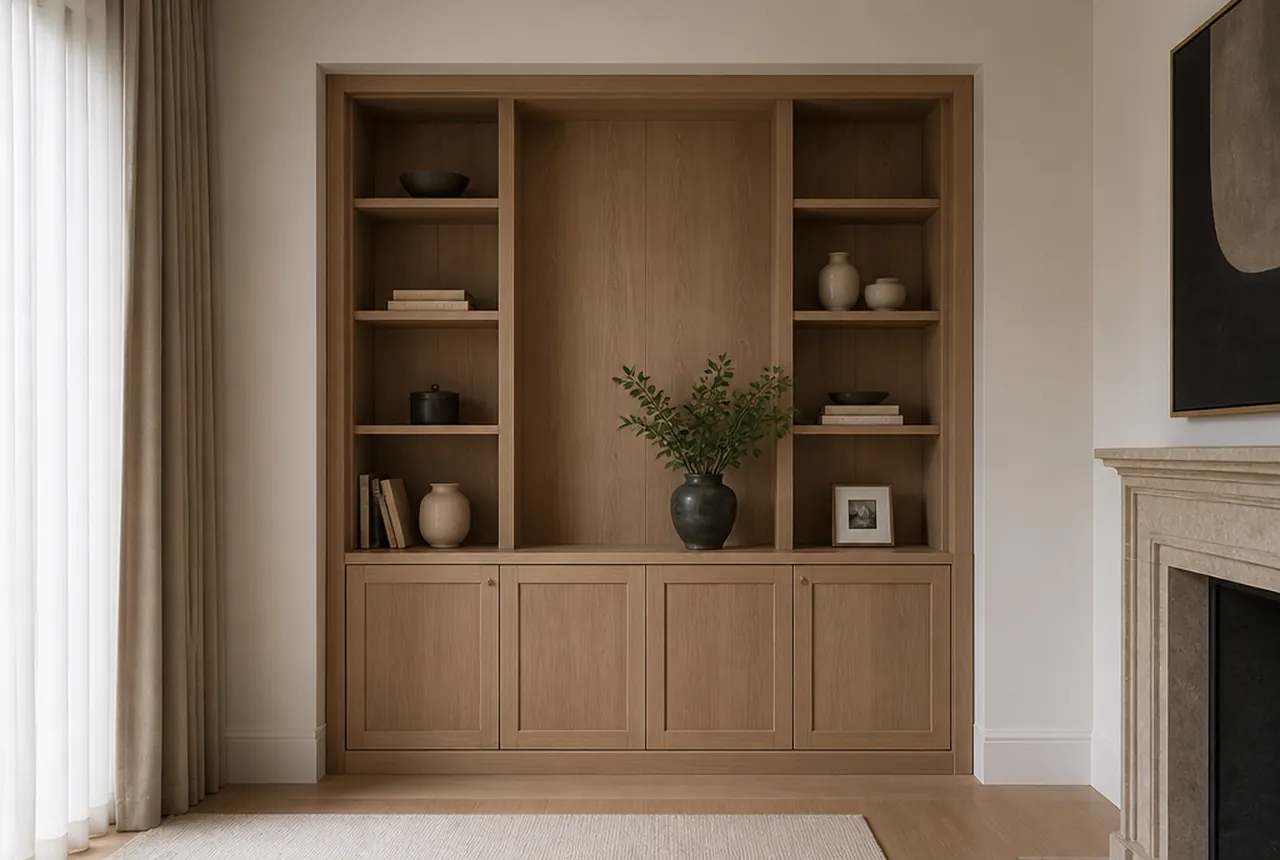
Fit to a dimension. An alcove, a sloped ceiling, a structural column or a room a few centimetres narrower than the standard package assumed all impose dimensions no catalogue satisfies. This is the strongest case for custom and it is measurable. Where a piece must sit within a fixed opening, custom is not a preference.
A specification the buyer controls. Custom lets the buyer state the frame construction, the foam density, the finish system, the hardware grade, the abrasion requirement and the flammability documentation. On a stock programme the buyer takes the factory’s decisions on all of those, sight unseen.
Repetition economics. A three hundred key hotel buying three hundred identical nightstands from one production run pays a unit cost reflecting a single setup amortised across a long run. At that quantity custom is often not more expensive than stock, because stock programmes are priced for buyers ordering in ones and twos. The crossover point depends on the item and the factory, but the direction is reliable: high repetition favours the made to order route.
Brand differentiation. Real but secondary in commercial terms, and a design conversation rather than a procurement one.
What the quick ship trade actually costs
Stock programmes are legitimate and useful, and they carry four costs that should be identified before an item is selected.
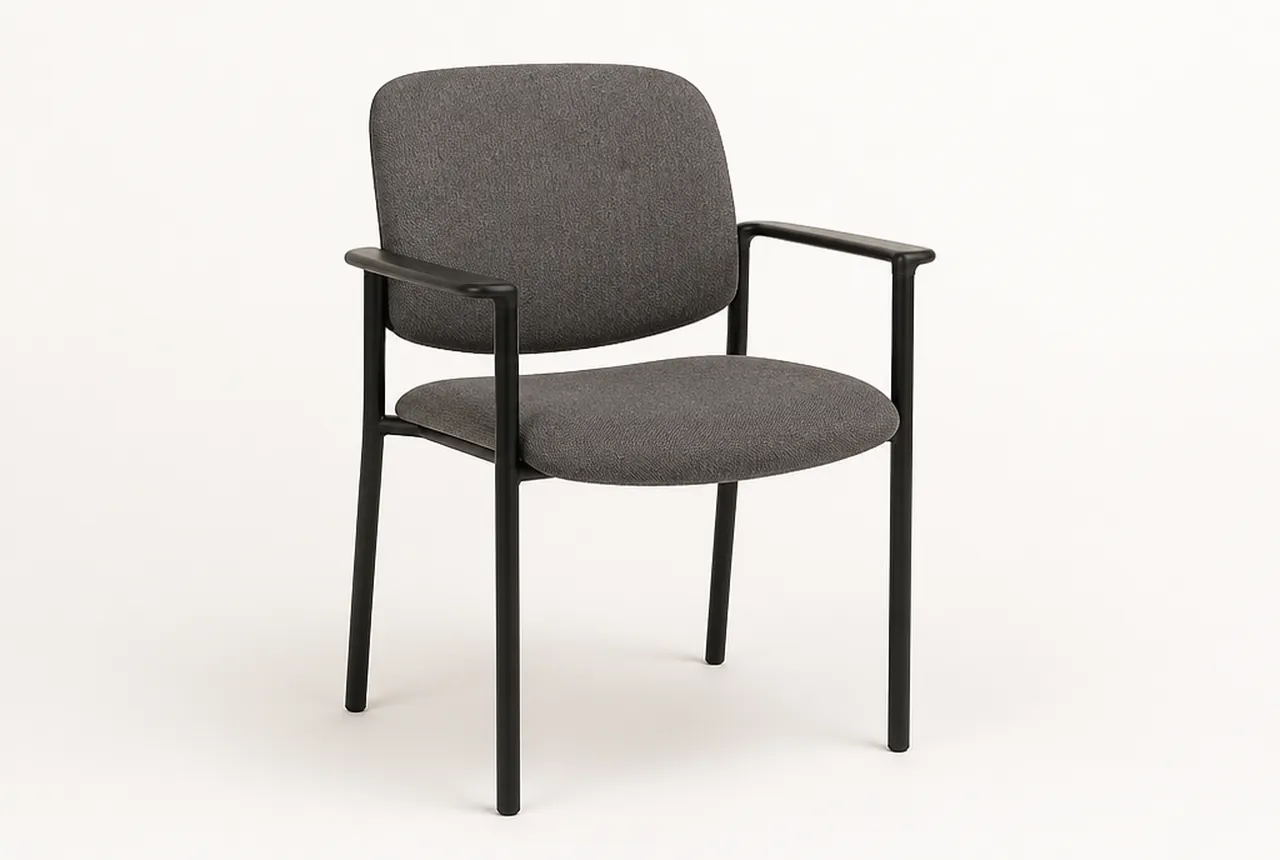
Fixed dimensions. The piece is the size it is. Where the room was designed around a different footprint, the compromise falls on circulation, which in an accessible room is not a compromise available at all.
A fixed palette. Stock means finished stock, which means the finishes and covers held in inventory. A programme offering a wide catalogue of covers usually offers them on a made to order lead time, not the quick ship one, and buyers routinely select a quick ship model with a non stock cover and are surprised when the lead time reverts.
Specification opacity. A stock piece is built to the manufacturer’s own specification. That specification may be excellent or it may be residential. Verify the specific model. Current North American voluntary references include ANSI/BIFMA X5.1 for general-purpose office chairs and ANSI/BIFMA X5.4 for public and lounge seating. For high-traffic woven upholstery, the ACT Voluntary Performance Guidelines use 30,000 double rubs Wyzenbeek or 40,000 cycles Martindale; the methods do not convert. Flammability documentation is separate and must match the standard the jurisdiction and project actually require.
Programme risk. A stock programme can be discontinued, restyled or reallocated. That matters most for replacement and attic stock, meaning the spares bought to cover damage. On a custom run, attic stock is bought with the original production and matches by definition. On a stock programme, a replacement bought two years later may be a revised model in a slightly different finish.

The lead time comparison
Lead time is where the two routes diverge most sharply, and the honest comparison includes the approval steps rather than only the production time.

| Stage | Pure custom | Modified standard | Standard, finish to order | Stock quick ship |
|---|---|---|---|---|
| Engineering and shop drawings | Required | Required for the modification | Not required | Not required |
| Prototype or first article | Normally required and approved | Often required | Sometimes a finish sample only | Not applicable |
| Finish and material approval | Full submittal cycle | Full submittal cycle | Finish and cover approval | Selection from stock range |
| Production | Full run scheduled into the plant | Full run scheduled | Run or partial stock draw | None, picked from inventory |
| Typical relative duration | Longest | Shorter than custom | Shorter again | Shortest by a wide margin |
| Where the schedule risk sits | Approval loops and plant slotting | Approval loops | Finish availability | Inventory allocation at order date |
Two things are worth reading out of that table. First, the approval cycle rather than the production run is what makes custom long, and approval time sits inside the project’s own control in a way that plant capacity does not. Projects that hold a submittal for weeks and then complain about a factory lead time have misdiagnosed the problem.
Second, the quick ship advantage is conditional. Stock is stock at the moment of the order, not at the moment of the quotation, and an item quoted as available can be allocated to another buyer before the purchase order is issued. Where quick ship is being used to recover a schedule, availability should be confirmed and, where the supplier permits, reserved at the time of the decision.
Hybrid programmes and where the line usually falls
Most well run hospitality packages are hybrids, and the split follows a consistent logic.
- Custom or modified standard for guest room casegoods, headboards, and any piece that must fit a specific dimension. High repetition and dimensional constraint both point the same way.
- Custom or standard finish to order for signature public area pieces where the design intent is the point.
- Standard finish to order for the bulk of guest room and restaurant seating, which is the majority of most packages by unit count.
- Stock quick ship for back of house, staff areas, offices, meeting room stacking chairs and folding tables, and for any category where the design contribution is negligible and replacement over time is expected.
- Stock quick ship as schedule recovery for a single item that has failed, where the alternative is delaying an opening.
That last case is the decision an owner will actually face. Assume a casegood item fails at pre shipment inspection late in the programme. The custom route means rework or a re run at the original factory, plus re inspection and freight, on a timeline that has to fit inside the remaining float. The quick ship route means selecting an available stock piece that fits the same footprint, verifying its specification documentation, and accepting a visual difference from the design intent. Custom protects the design and risks the opening date. Quick ship protects the date and costs design consistency, and in a guest room it can create a permanent two tier inventory where some rooms differ from others.
Neither answer is automatically right. What makes the decision defensible is having established, before the failure, who holds the authority to make it and what the acceptance criteria are, which is the governance question industry bodies such as the International Society of Hospitality Consultants treat as central to capital project control.

Making the call
Five questions decide the route for any given line item, and they should be answered at specification stage rather than at bid stage.
- Is the dimension constrained? If the piece must fit a fixed opening or preserve a required clearance, custom or modified standard is the only safe route.
- What is the quantity? High repetition erodes the price advantage of stock and often reverses it. Low counts favour stock.
- How much float remains? Float, meaning the spare time between the required delivery date and the latest date an order can be placed, is what buys the right to specify. A package with no float has already chosen quick ship whether it admits it or not.
- Does the specification need to be controlled? Where a brand standard, an accessibility requirement or a durability threshold has to be demonstrated, the route must produce model specific documentation.
- What happens at replacement? An item replaced individually over its service life is better served by a stable programme. An item replaced wholesale is better served by one run bought once with adequate attic stock.

The wider market matters here too. Pipeline data of the kind published by Lodging Econometrics, which tracks construction pipelines and forecasts openings by region, shows a continuing volume of projects moving through construction everywhere, which means factory capacity, stock allocation and freight are all being competed for. In a constrained market the quick ship option is less reliable than its name suggests, and the custom option requires slotting into a plant schedule earlier than owners expect. Both pressures point at the same discipline: decide the route item by item, decide it early, and treat any late change of route as the schedule event it is rather than a procurement preference. Swapping a custom item for a stock one late in the programme is a value engineering decision with consequences well beyond price, which is the argument made in FF&E value engineering.