
Contract furniture standards are the published performance and safety benchmarks that separate furniture built for commercial use from furniture built for the home. In FF&E, meaning furniture, fixtures, and equipment, the phrase contract-grade is used constantly and understood loosely, as though it were a quality claim a maker can assert. It is not. Contract-grade means the piece is documented to meet specific standards for structural durability, textile performance, and flammability, each of which is a named test with a pass threshold. A hotel is a public occupancy where furniture is used far harder than at home and held to fire codes a home never faces, so the standards matter both to how long the furniture lasts and to whether it is legal to install. This page maps the standards that define contract-grade, inside the FF&E specification guide. For the underlying definition of the package, see what FF&E is.
Why residential furniture fails in commercial use
Residential furniture is engineered for a household’s loads and cycles: a sofa sat on by the same few people, a desk used by one person, a chair that sees light duty. Commercial and hospitality furniture faces a different reality. A lobby chair may be sat in thousands of times a month, often by people who drop into it heavily, drag it across a floor, or lean it back on two legs. A guest-room desk is used by a new occupant every night. The forces, frequencies, and abuses are an order of magnitude harder, and furniture that was never tested for them fails early, sometimes dangerously. Contract standards exist to prove, before purchase, that a piece can take that punishment.
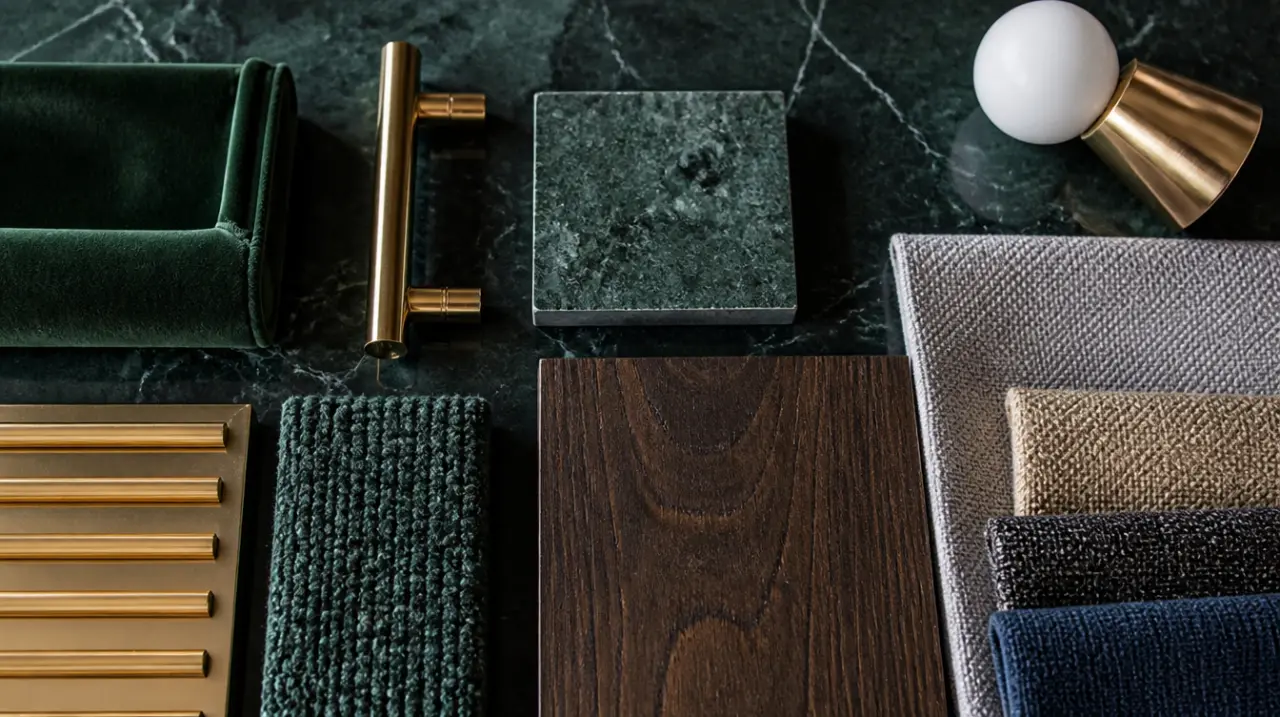
This is why an owner cannot rely on a vendor simply calling a product contract-grade. The claim is only meaningful when it is backed by the specific test results the relevant standards define, and a rigorous specification asks for those results rather than the label. The connection to sourcing the right product is developed in contract-grade furniture for hospitality.
Structural durability: the ANSI/BIFMA family
The primary body of structural furniture standards in North America is published under the ANSI/BIFMA designation, developed by the Business and Institutional Furniture Manufacturers Association and accredited through ANSI. These standards subject furniture to defined load, cycle, stability, and durability tests that simulate years of commercial use in a laboratory. Different categories have their own standard, so a specification names the one that fits the item:

- ANSI/BIFMA X5.1 covers general-purpose office chairs, testing seating and back cycles, stability, and leg strength.
- ANSI/BIFMA X5.4 covers lounge and public seating, the category most hotel lobby and lounge chairs fall under.
- ANSI/BIFMA X5.5 covers desks and tables, testing load and stability.
- ANSI/BIFMA X5.9 covers storage units such as casegoods and credenzas.
BIFMA also publishes sustainability work, including the standard behind the LEVEL certification for furniture environmental performance. The BIFMA and ANSI documents themselves are sold through their publishers and their sites restrict direct access, so these designations are named here in text and a specification should cite the exact standard number for each item and require the vendor to certify to it. Where a category has no ANSI/BIFMA standard, ASTM methods may apply, and those too are named in the specification rather than assumed.
Textile performance: the ACT guidelines
Structural testing proves the frame; textile testing proves the covering. The ACT Voluntary Performance Guidelines, published by the Association for Contract Textiles, are the framework that defines whether a fabric is fit for contract use. They set documented categories for abrasion resistance, measured in double rubs or cycles, colorfastness to light, wet and dry crocking, brush pill and physical properties, and flammability. A contract-grade specification requires the covering to meet stated thresholds in these categories rather than trusting the fabric’s grade, which is a price tier and not a durability measure. The distinction between grade and tested durability is the subject of fabric grades and durability.

Flammability: the compliance floor
The third pillar is flammability, which must be matched to the jurisdiction, occupancy, product, and material. California Technical Bulletin 117-2013 addresses smolder resistance of upholstered components; NFPA 260 and NFPA 261 address cigarette ignition resistance through component and mock-up methods. California repealed its TB 133 public-occupancy requirement in 2019, so an old specification naming TB 133 is not proof of a current legal requirement. A project may still require a full-scale or open-flame test, while drapery and finish materials answer to separate standards such as NFPA 701 and ASTM E84. Confirm the current requirement with the authority having jurisdiction and name the exact test in the specification.
Verifying a contract-grade claim
Because contract-grade is a documented status rather than a marketing word, the specifier’s job is to ask for the documentation and read it. A credible vendor can produce the specific test reports the standards call for: the ANSI/BIFMA test result for the item category, the ACT-aligned performance data for the covering, and the flame certification for the occupancy. The right questions are concrete. Which standard number was the piece tested to, and to what performance level. Was the fabric performance data generated on the actual specified covering or on a generic substitute. Does the flame certification name the exact code the jurisdiction requires. A vendor who answers these with documents is offering contract-grade product; a vendor who answers with reassurance is offering a label. Receiving inspection then closes the loop, checking delivered product against the certified specification so that a compliant sample cannot quietly become a non-compliant production run.
Sustainability standards and the wider picture
Contract-grade increasingly carries an environmental dimension alongside structure, textiles, and flame. BIFMA developed the standard behind the LEVEL certification, which rates a furniture product’s environmental and social performance across materials, energy, and human health criteria, and independent programs such as GREENGUARD certify low chemical emissions for indoor air quality. Many hospitality brands and green building programs now ask for one or more of these, so a specification may name a sustainability certification as a requirement in the same way it names a durability or flame standard. These programs do not replace the structural and safety standards; they sit beside them, and a piece can be contract-grade for durability and flame while also carrying an environmental certification. The point for the specifier is that contract-grade is a growing set of documented attributes, and the specification is where the project decides which of them it requires. The sustainability dimension is developed further in the wider procurement literature and should be confirmed against the brand standard for the specific project.
Contract-grade is a system, not a label
The three pillars work together, and a piece is only contract-grade when all three are satisfied. A high-abrasion fabric over a frame that fails ANSI/BIFMA loading is not contract-grade; a robust frame wrapped in a fabric that fails the flame code is not installable; a piece that passes structure and flame but uses a delicate covering will wear out early. This is why contract-grade specification treats the frame, the fill, the covering, and the compliance data as one system, each part documented to its own standard. A specification that names ANSI/BIFMA for structure, ACT for textiles, and the applicable flame codes for compliance, and that requires certification for each, produces furniture that survives the refurbishment cycle and passes inspection.
Specifying to the standards
The practical discipline is to stop accepting the word contract-grade as a claim and start requiring the evidence behind it. For every item, the specification names the structural standard that fits its category, the textile performance thresholds the covering must meet, and the exact flame code the occupancy requires, and the vendor returns certification and test documentation as part of the submittal before production is released. Owners who specify to the standards buy furniture that behaves as contract-grade in service. Owners who accept the label buy whatever the vendor decided the label meant, which in a hard-used public building is rarely enough.