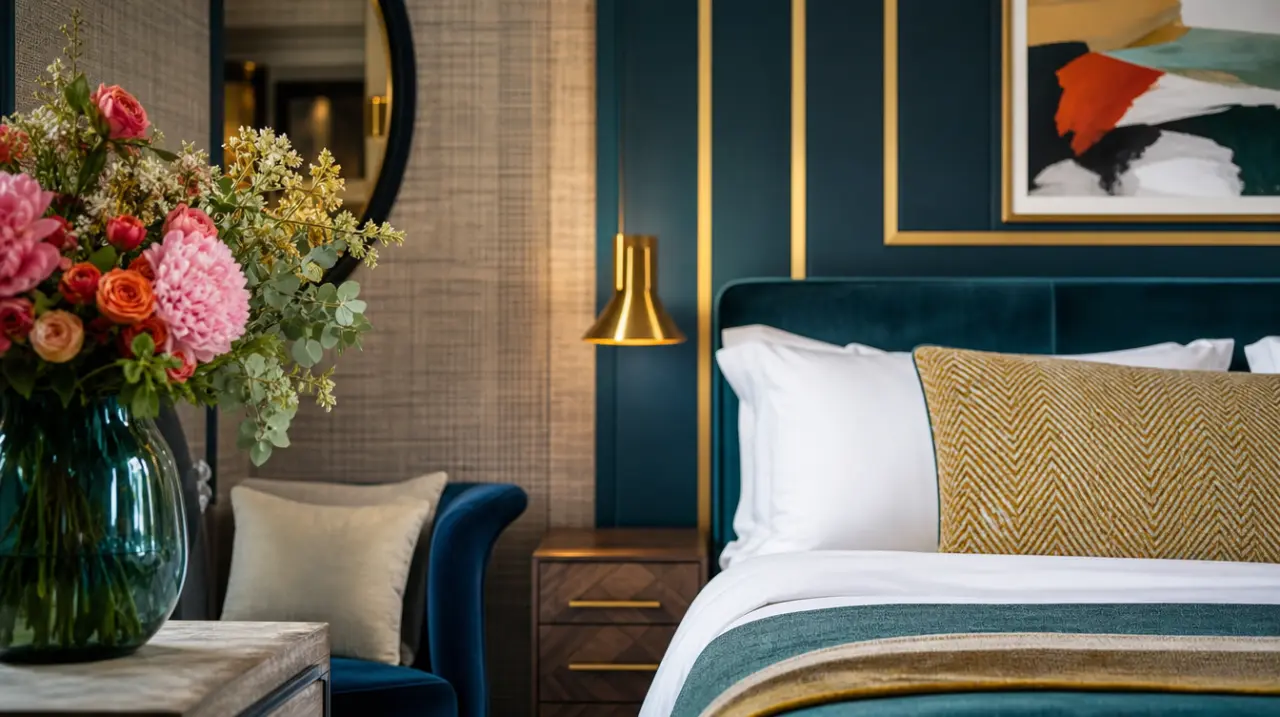
A materials board is the physical assembly of every finish, textile, and surface that will be bought for one room type or one public area, pinned together so the whole palette can be judged at once. In FF&E, meaning furniture, fixtures, and equipment, the board is the step between a designer’s intent and a written specification a factory can build to. It is where a palette either survives contact with contract performance data or quietly fails it, and where a procurement team finds out whether the beautiful thing on the wall can actually be bought at the required standard, in the required quantity, in the required lead time.
What follows is fifteen boards, one per category, each covering how the material actually wears in a hospitality setting, where it tends to fail, and the language that belongs in the specification. For the underlying definition of the package see what FF&E is, and for how these decisions are documented item by item see the FF&E specification guide.
1. The guest room board
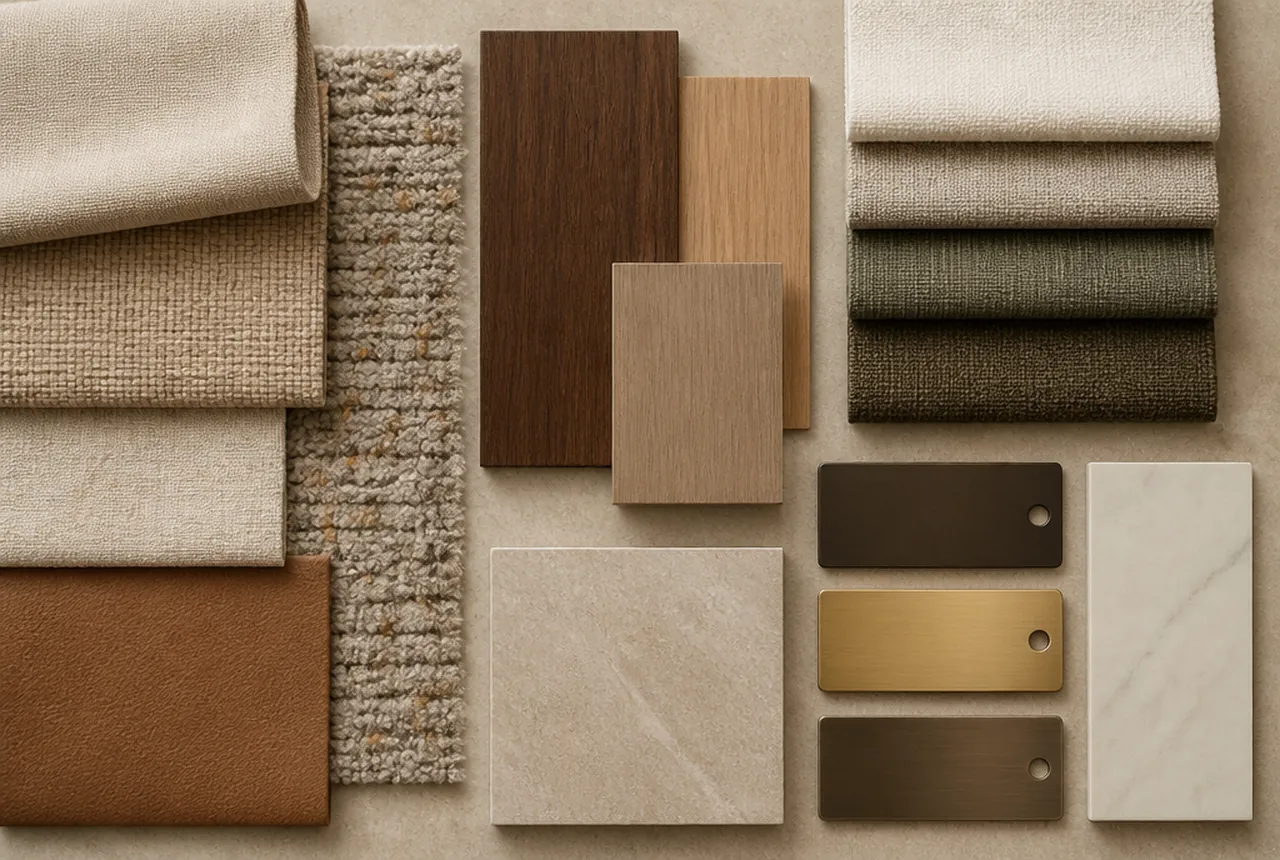
The guest room board carries the smallest number of decisions and the largest consequences, because everything on it is multiplied by the key count. Wear is concentrated in predictable places: luggage strikes casegood bases and the corridor-side corner, the desk edge takes abrasion and spilled liquid, the lounge chair arm absorbs body oils and hand sanitizer, and the carpet crushes in the path from door to bed to window. A palette that looks balanced on a wall can still fail because one high-contact item was selected on appearance alone.
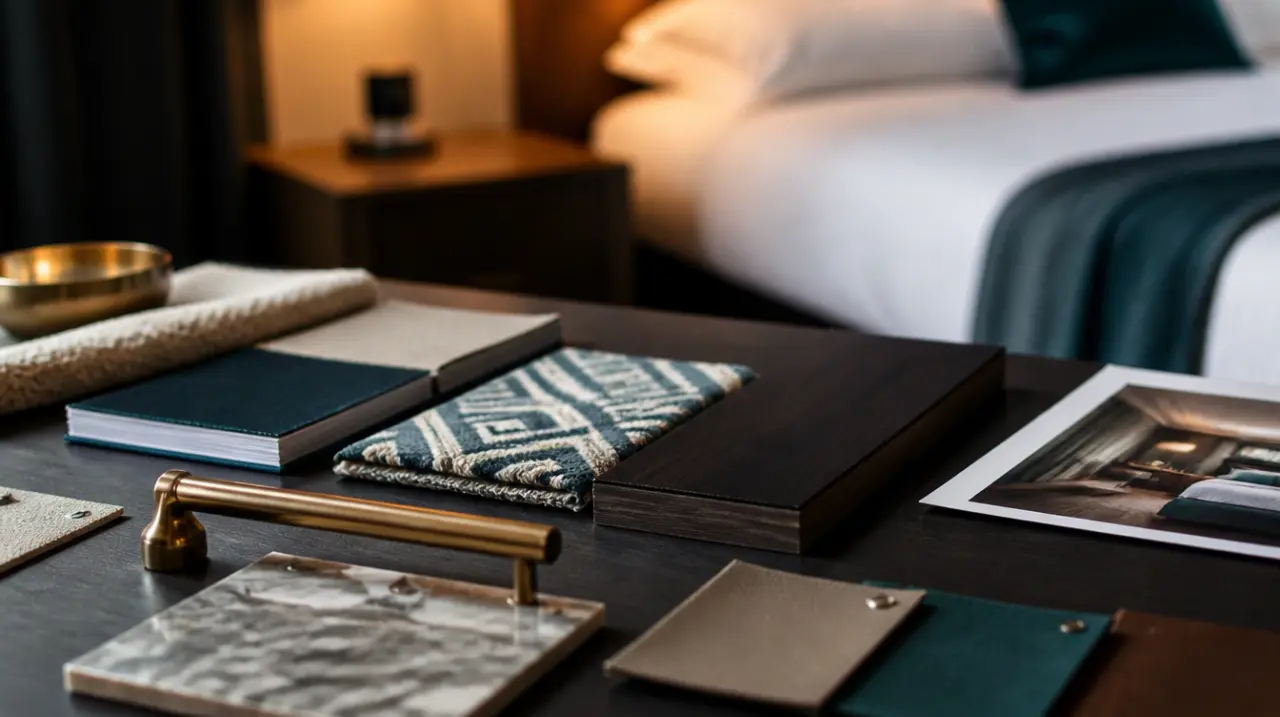
Write into the spec: the structural standard that fits each item category, meaning ANSI/BIFMA X5.5 for desks and tables, X5.9 for storage units and casegoods, and X5.4 for lounge or public seating, plus a stated abrasion threshold for every textile and a numbered control sample against which each finish will be judged at submittal.
2. The lobby board
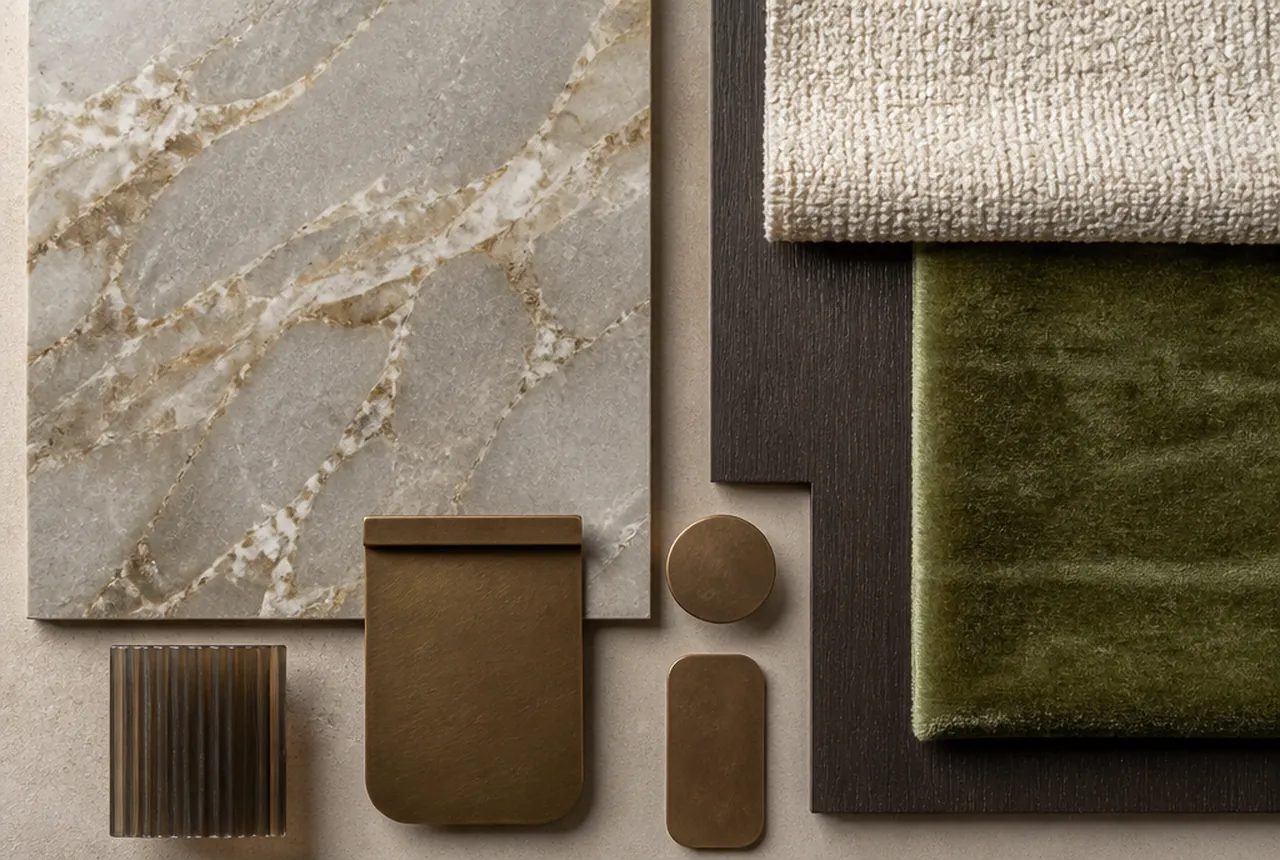
Lobby materials face the highest traffic volume in the building and, in most modern lobbies, the highest light exposure. The failure that catches teams out is not abrasion but fade. A textile with excellent double rub numbers will still look wrong within a year if it sits in a glazed lobby and its colorfastness to light was never checked. Hard flooring transitions and the chair legs dragged across them are the second pressure point, along with wheeled luggage against seat bases and feature panels.
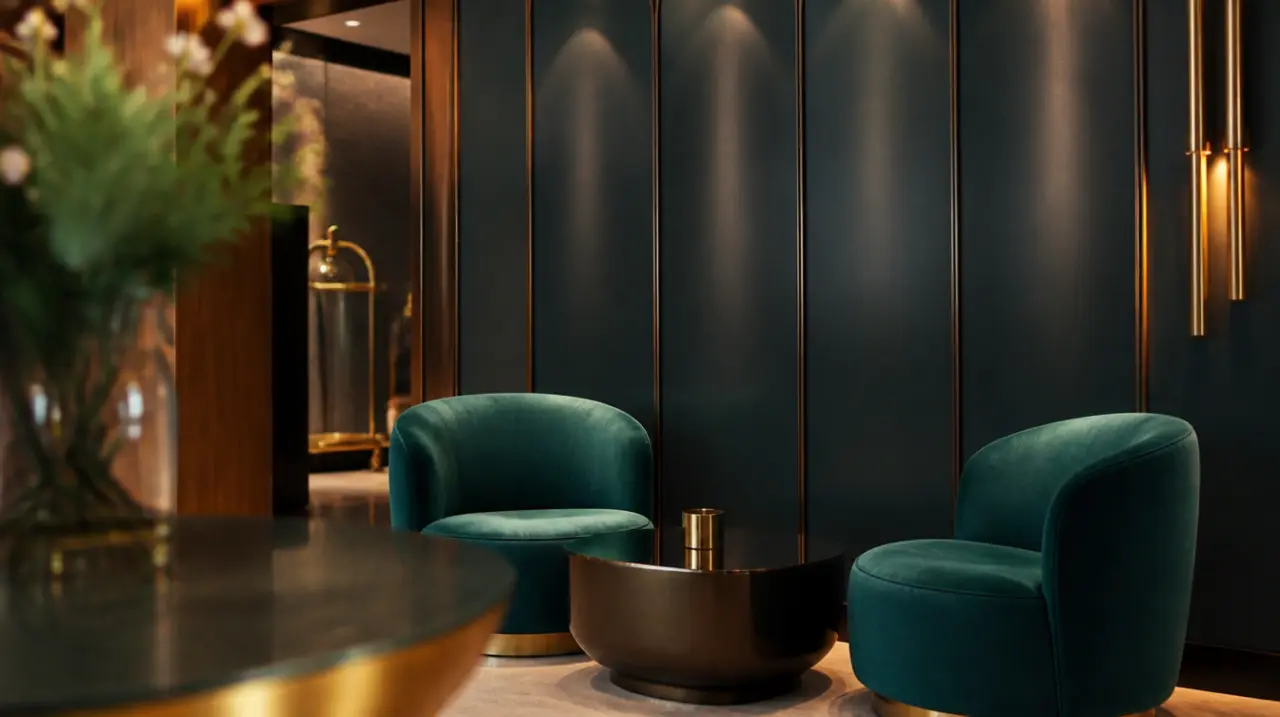
Write into the spec: ANSI/BIFMA X5.4 for lounge and public seating, an explicit colorfastness to light requirement from the ACT performance framework, the flame code the occupancy requires, and a demand that the performance data be generated on the exact specified covering rather than on a representative fabric from the same mill.
3. The restaurant and bar board
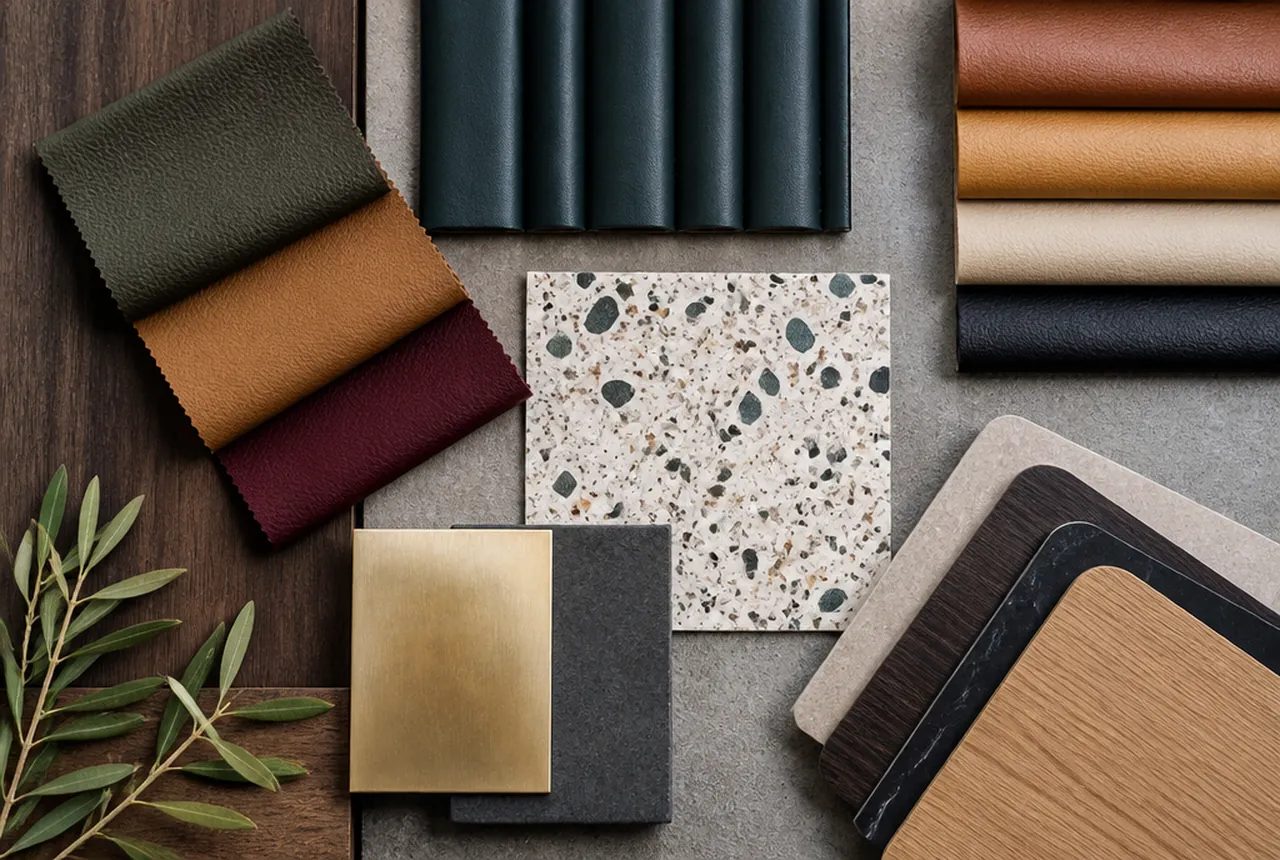
In food and beverage areas, cleanability outranks every other property. Grease, wine, sanitizer, and repeated wiping do more damage than the sitting itself. Banquettes take concentrated load at the front edge, chairs are dragged rather than lifted, and worktops meet acidic spills daily. The common mistake is specifying a beautiful woven textile for a banquette when a coated fabric or a tightly constructed solution-dyed cloth is the only thing that will still look acceptable under a cleaning regime built around speed.
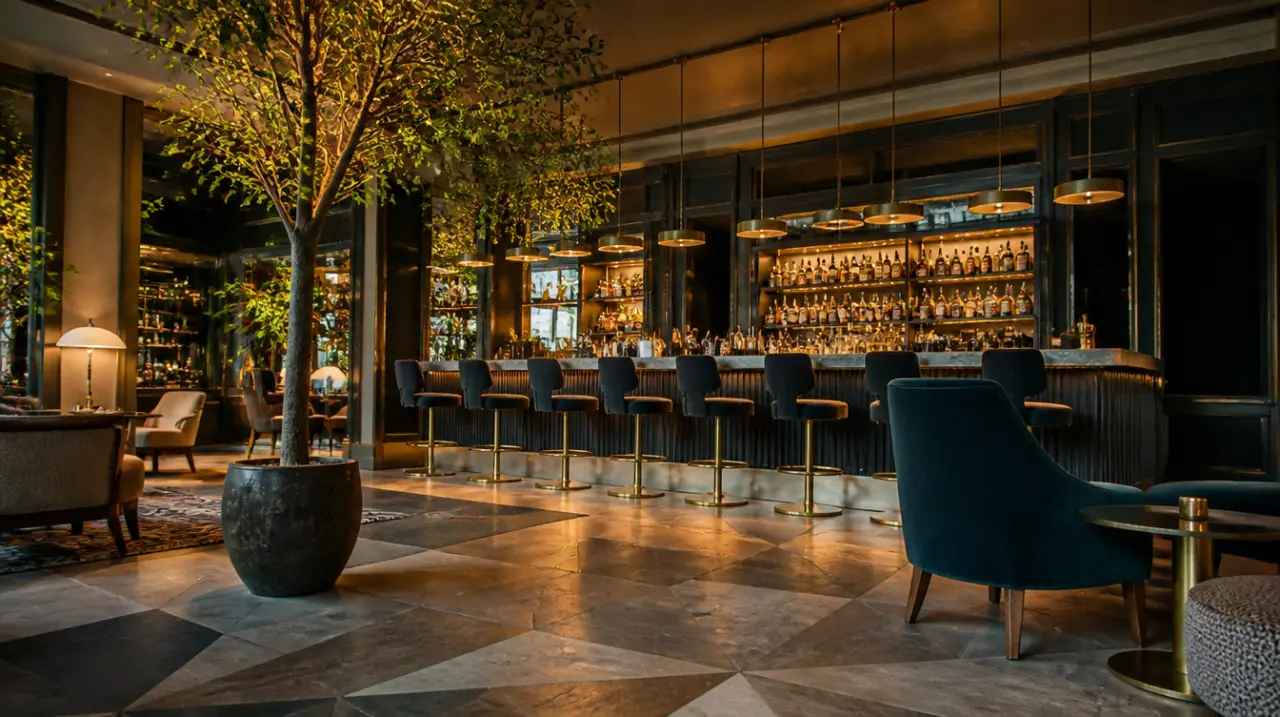
Write into the spec: the permitted cleaning method and the exact dilution the covering must tolerate, wet and dry crocking requirements so colour does not transfer to guests, a sealed and rated worktop material, and the chair glide and stacking detail so that dragging does not destroy the floor finish.
4. The upholstery grade board
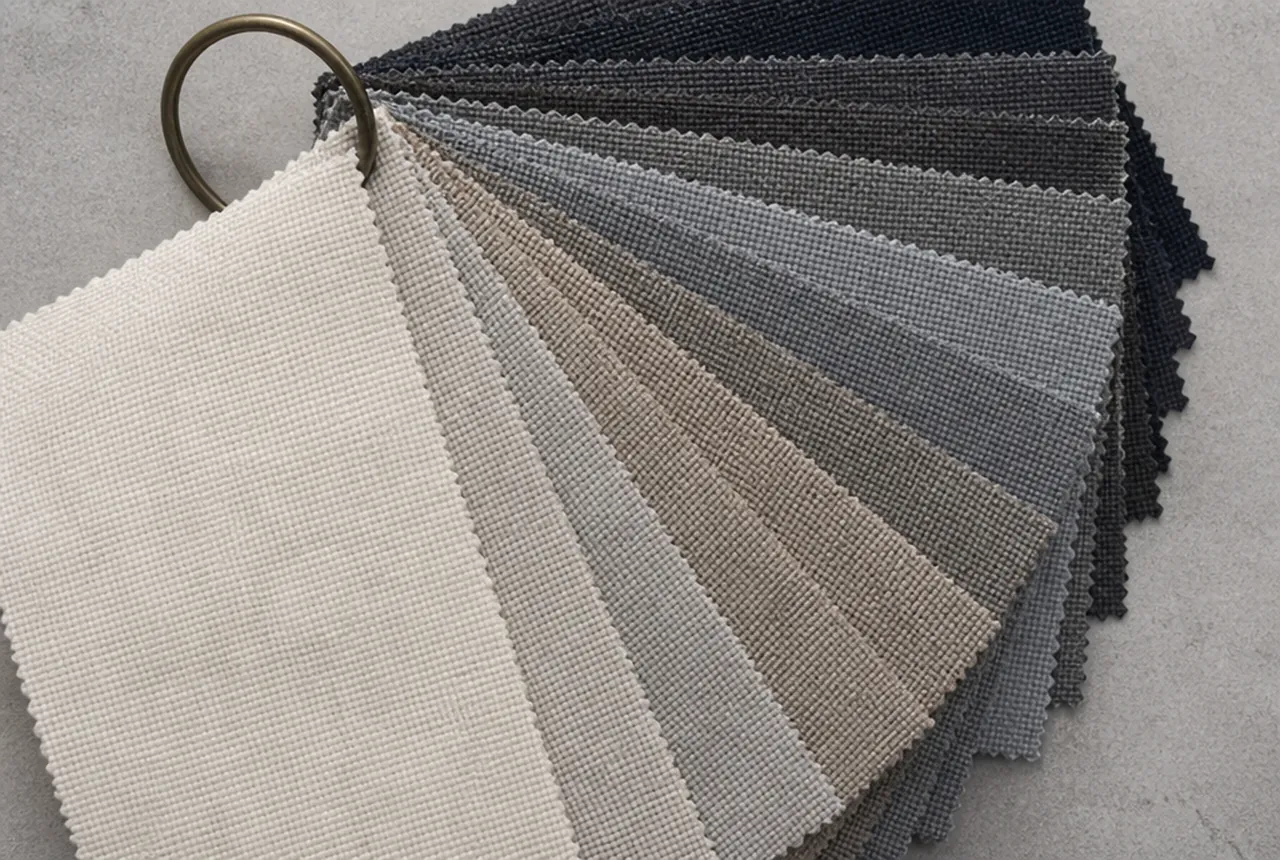
Grade is a price tier assigned by a manufacturer, not a durability rating. Durability is measured. The Wyzenbeek method, run under ASTM D4157, reports abrasion resistance in double rubs; the Martindale method, run under ASTM D4966 or ISO 12947, reports it in cycles. The results do not convert. ACT’s current high-traffic woven-upholstery guideline is 30,000 double rubs Wyzenbeek or 40,000 cycles Martindale, so a specification must name the method as well as the threshold. The full picture is set out in fabric grades and durability.
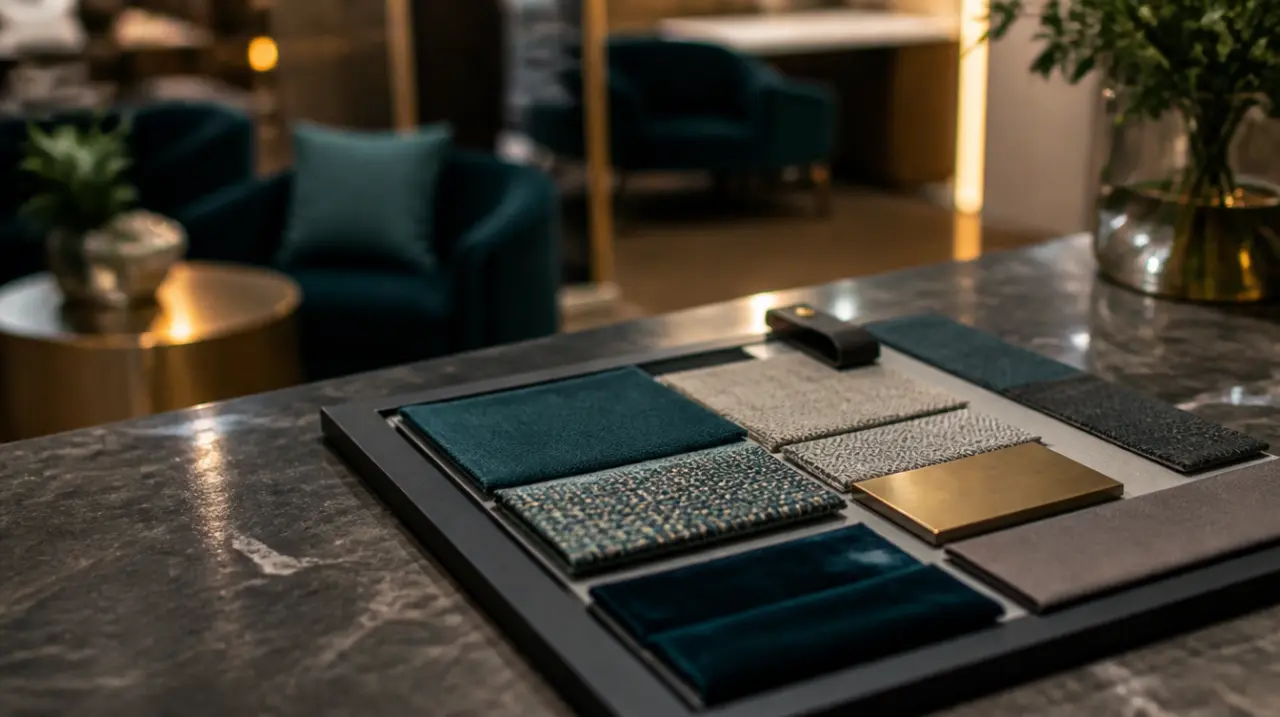
Write into the spec: the test method, the required count, the fabric direction and pattern repeat, the cleaning code, and the pilling and seam slippage expectations, because a fabric that passes abrasion but pills badly looks worn long before it wears through.
5. The leather and coated fabric board
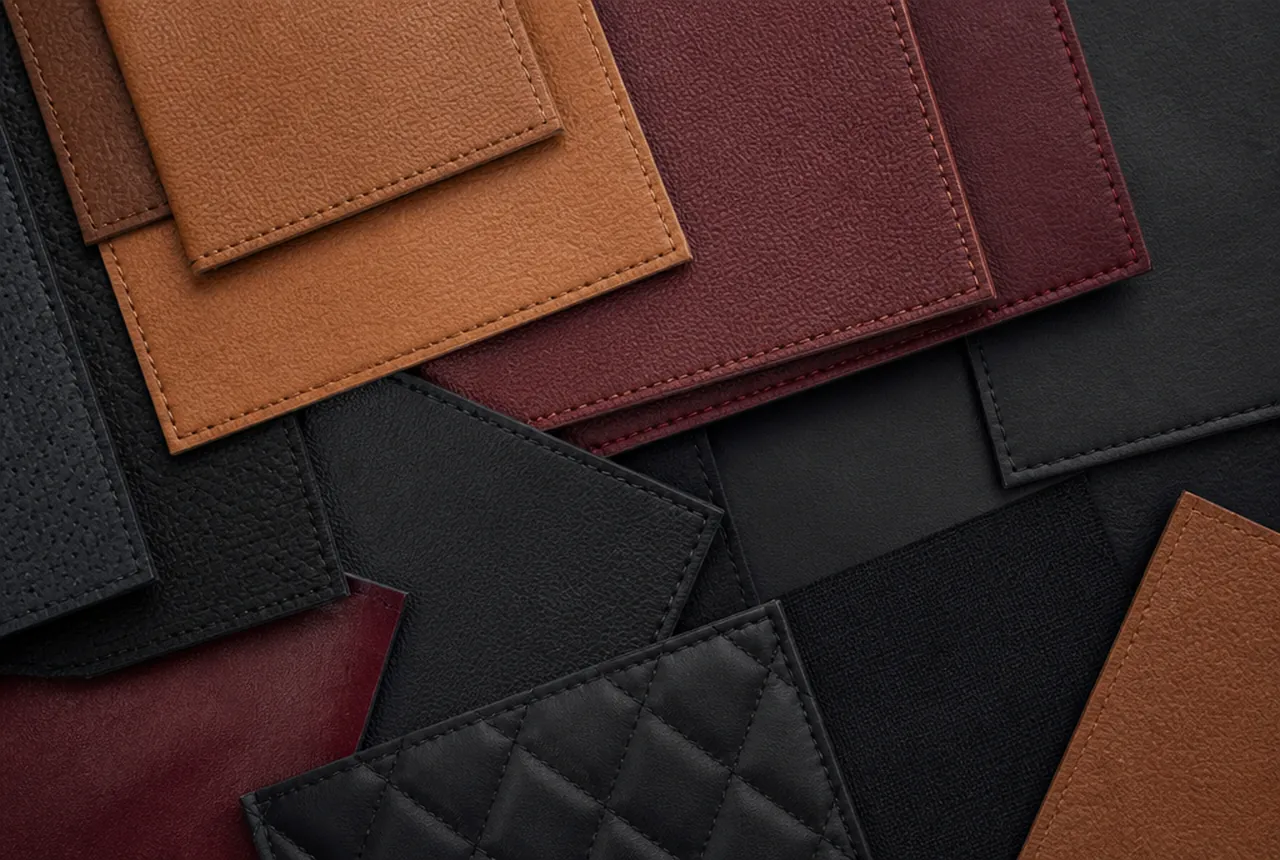
Leather and coated fabrics are specified for cleanability and are usually undone by chemistry rather than by wear. On a coated fabric, whether polyurethane or vinyl, the topcoat is the working surface, and sunscreen, hand sanitizer, and denim dye attack it long before the backing gives up. On leather, the distinction that matters is full grain and top grain against corrected and bonded material, and bonded leather has no place on a hard-used contract seat. Both are frequently buyer supplied, which shifts responsibility: COM means Customer’s Own Material and COL means Customer’s Own Leather, and in both cases the buyer, not the frame manufacturer, owns the performance and flame data. That handoff is covered in COM fabric explained.
Write into the spec: the material type and finish, the yield allowance for hides so the order covers cutting waste, the cleaning agents and dilution the surface must survive, and the party responsible for supplying certification when the covering is COM or COL.
6. The commercial carpet board
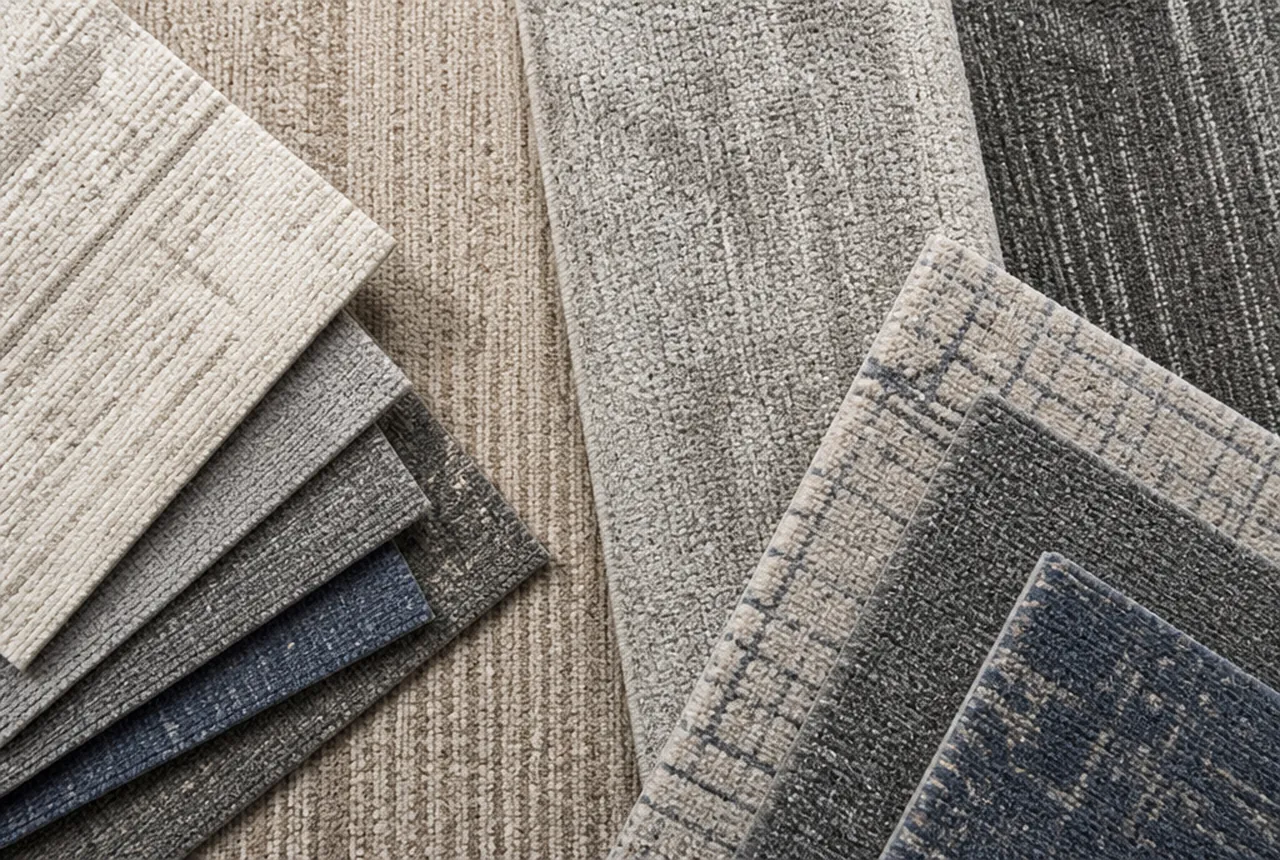
Contract carpet very rarely wears through. It crushes, mats, and develops traffic lanes at doors, lift lobbies, and corridor turns, and it is that loss of appearance, not loss of material, that ends its service. Construction and density do more to resist this than fibre choice, which is why a specification that names only a fibre and a colour has left the important decision unmade. Pattern also carries a hidden cost: a large repeat drives waste on a corridor run and complicates the seaming plan.
Write into the spec: the construction, meaning tufted loop, cut pile, or woven, the face weight in ounces per square yard, the density, the pattern repeat and match, the cushion or backing, the seaming plan, and the flooring flammability class the occupancy requires under the ASTM E648 and NFPA 253 radiant panel test, alongside the ASTM D2859 pill test.
7. The wood veneer board
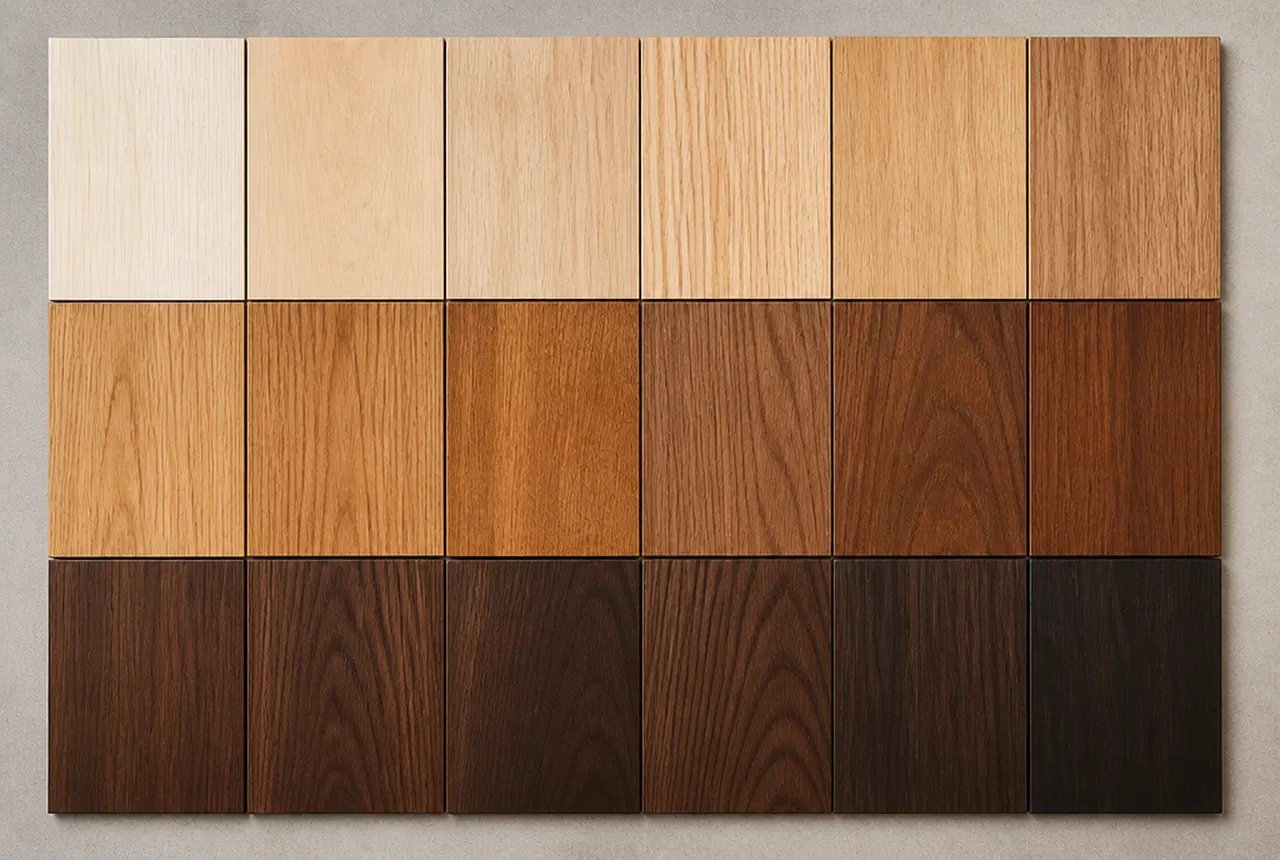
Veneer over a stable engineered core outperforms wide solid timber panels in a hotel, because solid panels move with the humidity swings a building runs through and veneered panels do not. The risks sit elsewhere. Veneer is a natural product cut from a flitch, so colour drifts between batches, and an order spread across several production runs can deliver visibly different rooms on different floors. The topcoat, more than the stain, determines how the surface survives contact, and a catalysed conversion varnish behaves very differently from a light lacquer.
Write into the spec: the species, the cut, meaning plain sliced, rift, or quarter, the match, the grade referenced to the Architectural Woodwork Standards, the topcoat system and sheen, a requirement that the full order be produced from sequenced material, and a retained numbered control sample that governs acceptance at receiving.
8. The laminate and edge board
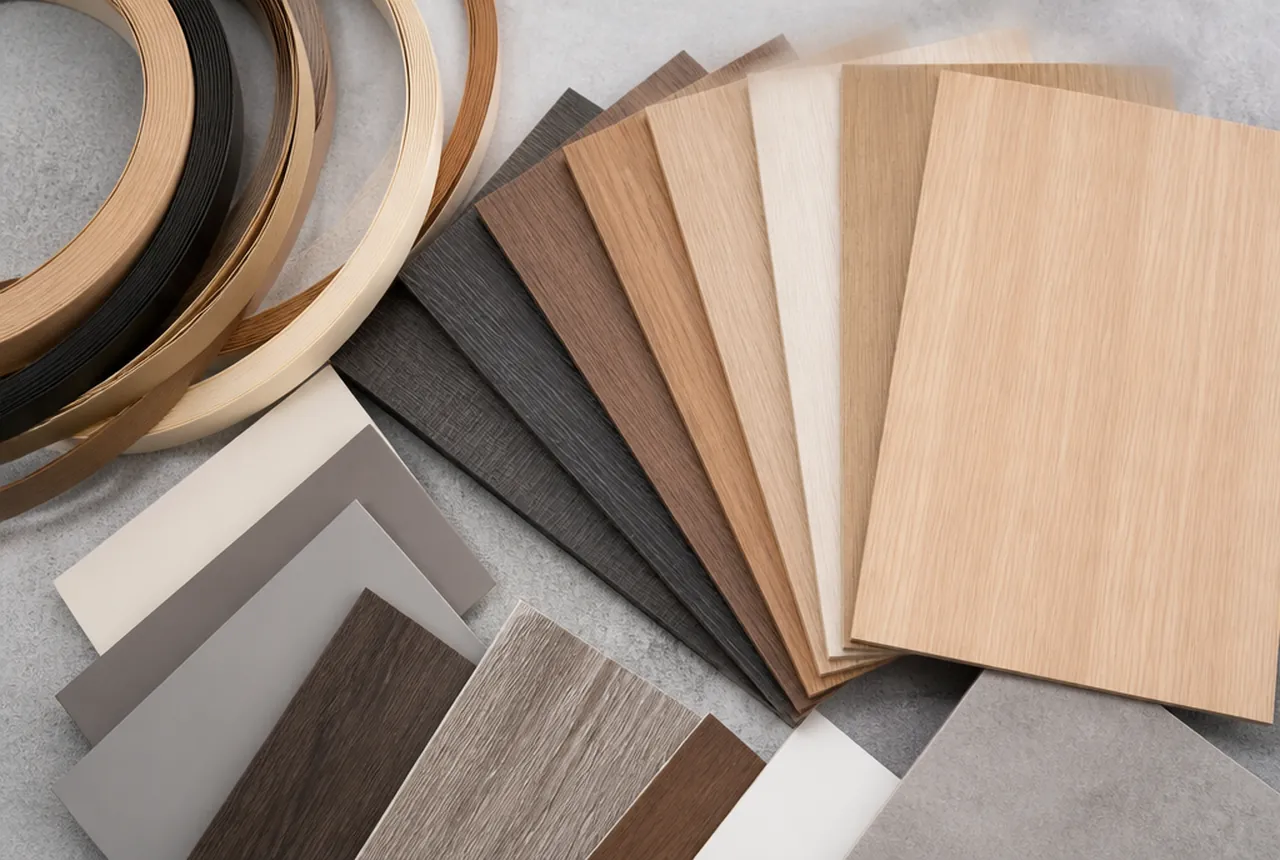
Laminate faces are hard, consistent, and easy to buy in volume, which is why they carry so much hospitality casegood work. They almost never fail across the face. They fail at the edge, where a housekeeping cart, a vacuum body, or a suitcase catches a corner and lifts the banding, and once moisture gets behind the band the substrate swells and the piece is finished. High pressure decorative laminate is manufactured to the NEMA LD 3 standard, which is worth naming so that a thinner low pressure product is not substituted quietly.
Write into the spec: the laminate type and the standard it is manufactured to, the edge profile, the banding material and thickness, since a thicker profiled band survives impact far better than a thin applied tape, the adhesive system, and ANSI/BIFMA X5.9 for the storage unit itself.
9. The stone and quartz board
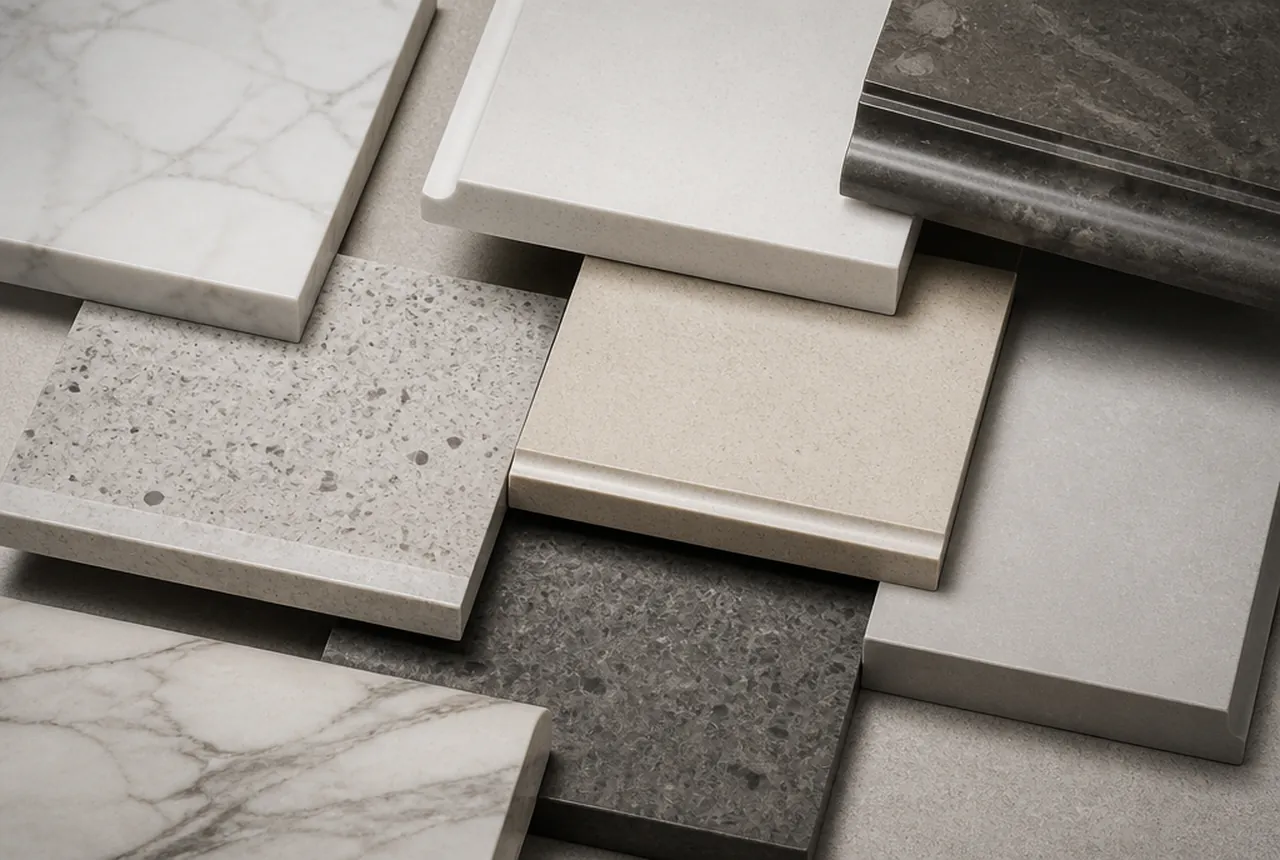
The distinction that governs this board is that natural stone is a natural range and engineered quartz is a manufactured product. Natural stone varies slab to slab, so an approved sample is an indication rather than a guarantee, and calcareous stones such as marble etch when they meet citrus, wine, or an acidic cleaner. Engineered quartz is consistent and non porous, but its resin binder is sensitive to sustained heat and to prolonged ultraviolet exposure, which rules it out of sunlit or exterior adjacent positions. Finish changes the failure mode too: a honed surface hides scratches and shows staining, and a polished surface does the opposite.
Write into the spec: the material, thickness, finish, and edge profile, the sealer and its reapplication requirement for natural stone, slab or lot approval where variation matters, and confirmation that any food contact surface meets the sanitation requirement for its use.
10. The metal finish board
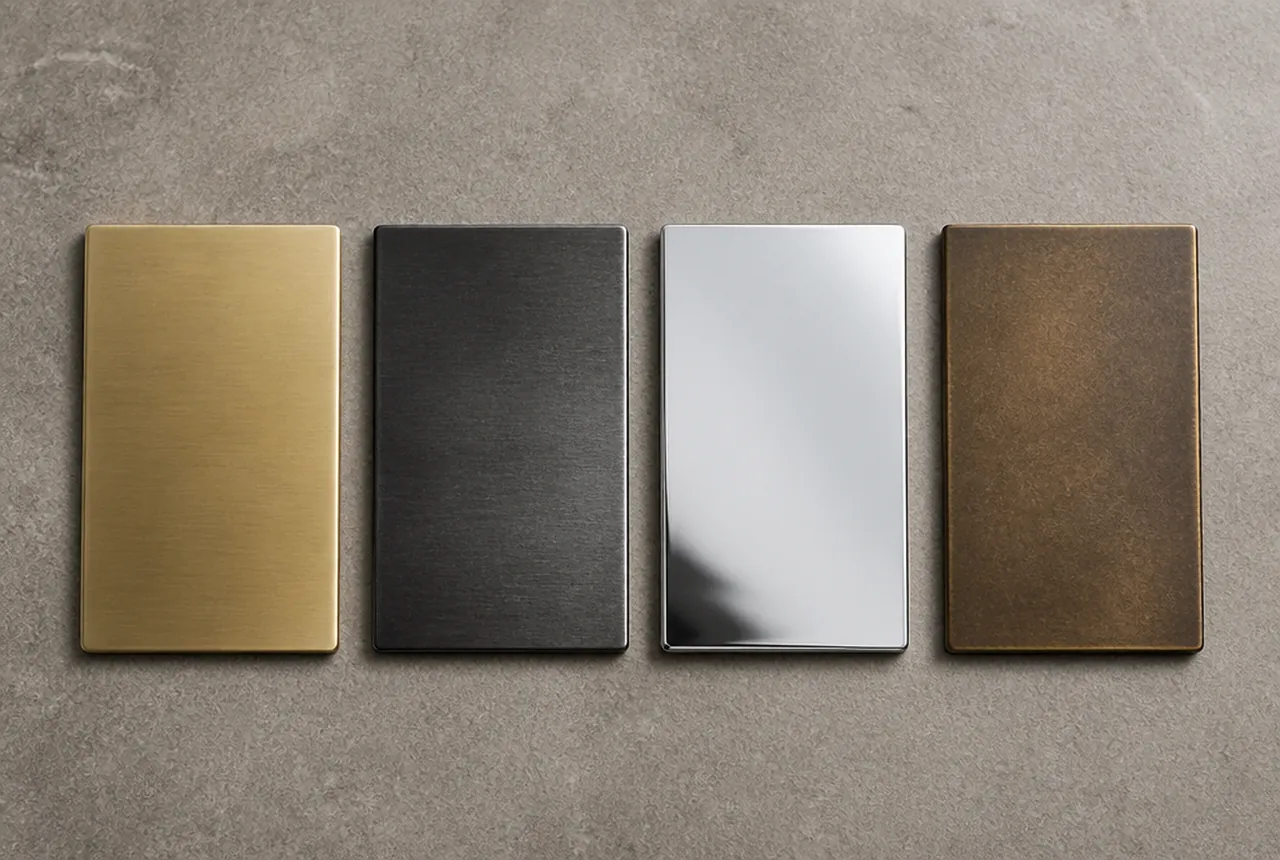
Metal is the finish most likely to arrive looking wrong, because finish names are not standardised across suppliers. A brushed brass from a lighting vendor, a chair vendor, and a hardware vendor will be three different colours in the same room unless physical control samples are exchanged and approved across all three. Durability then depends on the coating system: powder coating is tough and repairable in limited ways, plating is thin and wears at contact points, and a living or unlacquered finish is specified precisely because it will change, which needs to be an explicit decision rather than a surprise.
Write into the spec: the base metal and gauge, the finish system and whether it is protected or intentionally unlacquered, cross vendor control sample approval for every item sharing a finish, and a salt spray corrosion requirement under ASTM B117 where the item sits near a pool, a spa, or a coastal exterior.
11. The window treatment board
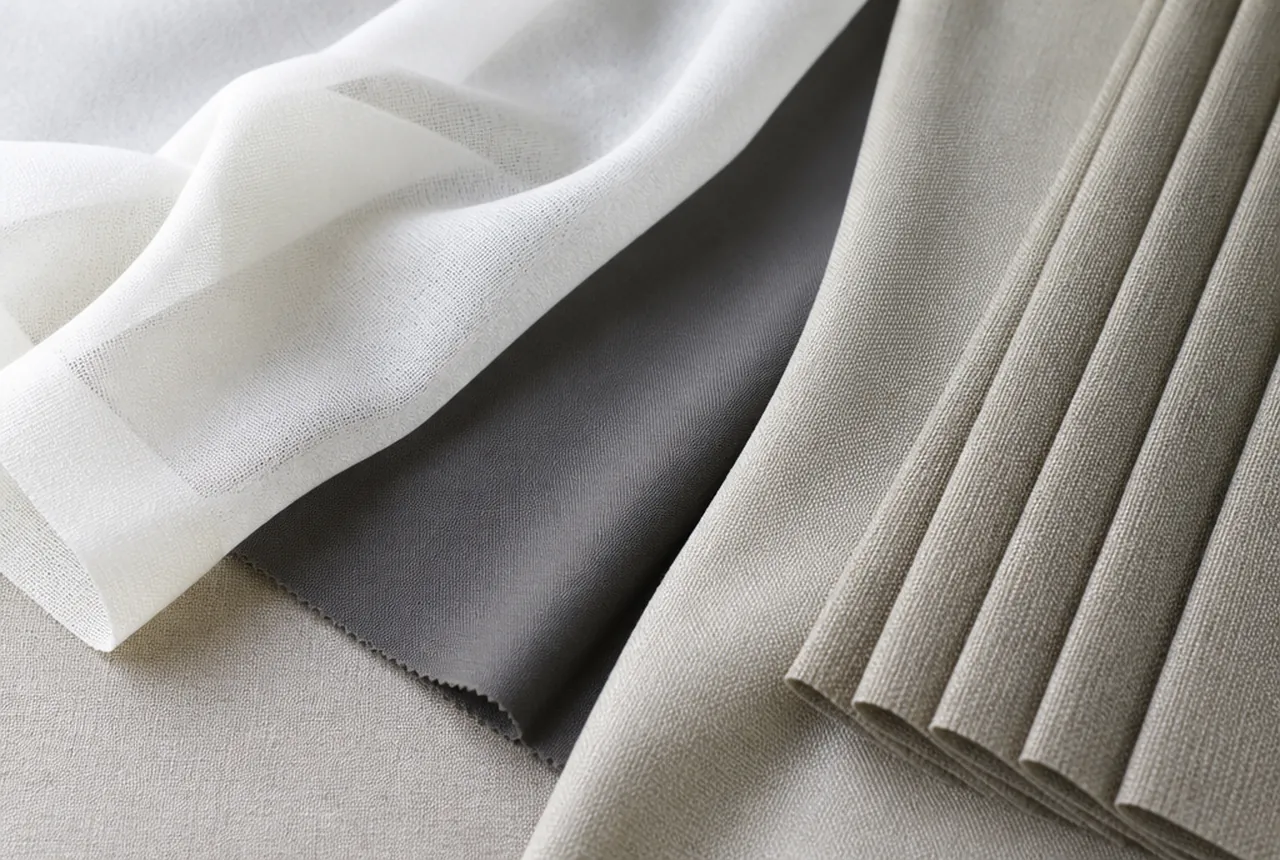
Drapery almost never fails from abrasion, so the durability logic that governs seating does not apply here. What governs is light. Sheers and dim out fabrics fade and go brittle under sustained sun, and blackout linings crack along the fold line where the coating is worked repeatedly. Guests judge blackout by the light that reaches the bed, and much of that light comes past the fabric rather than through it, so the track, the return, and the overlap are as much a part of the specification as the cloth.
Write into the spec: the face fabric, the lining type and weight, the fullness, the hem and weighting detail, the track and return that deliver the light seal, the cleaning code, and flame propagation certification to NFPA 701, which is the relevant standard for textiles hung this way rather than the upholstery standards.
12. The warm neutral palette board
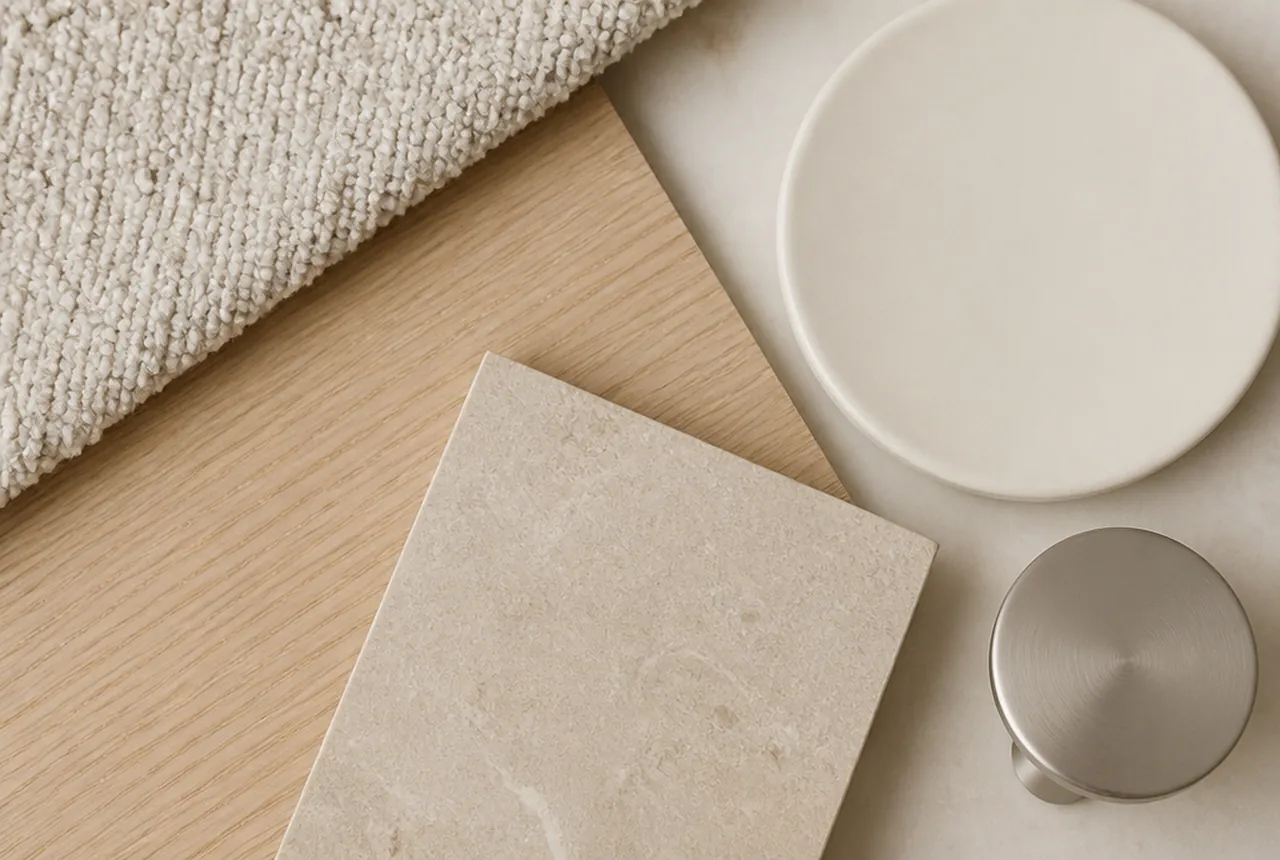
Warm neutrals dominate hospitality because they are commercially forgiving. Substitutions are easier to find, attic stock is easier to match, and value engineering has somewhere to go. The trap is metamerism, where two samples that match under the showroom light separate under the project’s actual lamps, which is how a palette approved in one room reads as mismatched once installed. Mid tone neutrals also show soiling unevenly, with entry areas and lift lobbies darkening first.
Write into the spec: that the entire palette be reviewed together under the project’s specified lamp colour temperature before approval, a stated tolerance for acceptable finish variance, and attic stock drawn from the same production run so a later repair does not introduce a visible mismatch.
13. The dark palette board
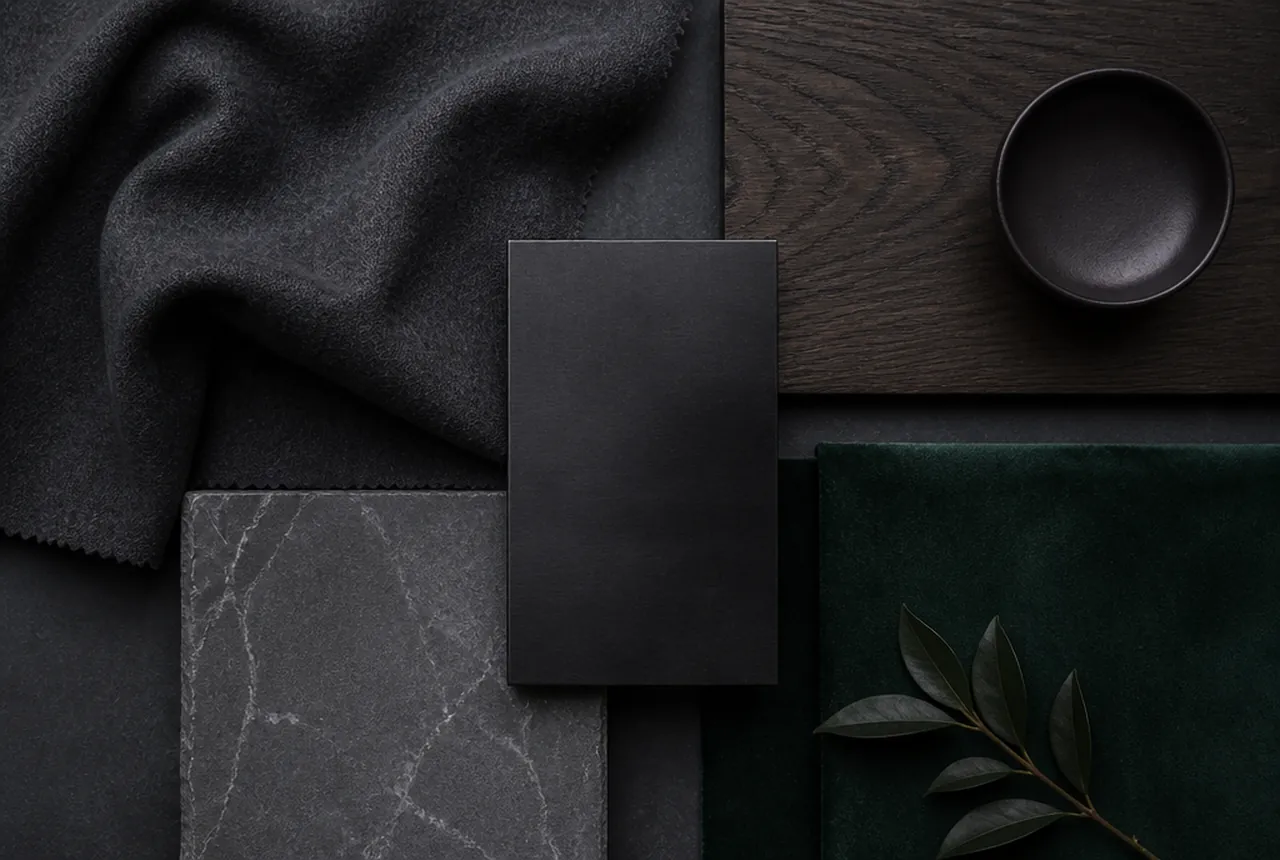
A dark palette hides stains and shows everything else. Dust, lint, water spots, and scuffs read strongly on a dark matte surface, matte black metal holds fingerprints at every touch point, and deep dyed textiles are the most likely to transfer colour onto clothing. Touch up is also harder: a chip in a deep stained timber is far more visible than the same chip in a mid tone, and matching a repair to a dark finish is a specialist job.
Write into the spec: demanding wet and dry crocking limits so colour does not transfer, a pilling requirement on dark textiles where fuzzing is most visible, a defined touch up and repair system supplied with the order, and attic stock in matched dye lot and finish batch.
14. The coastal palette board
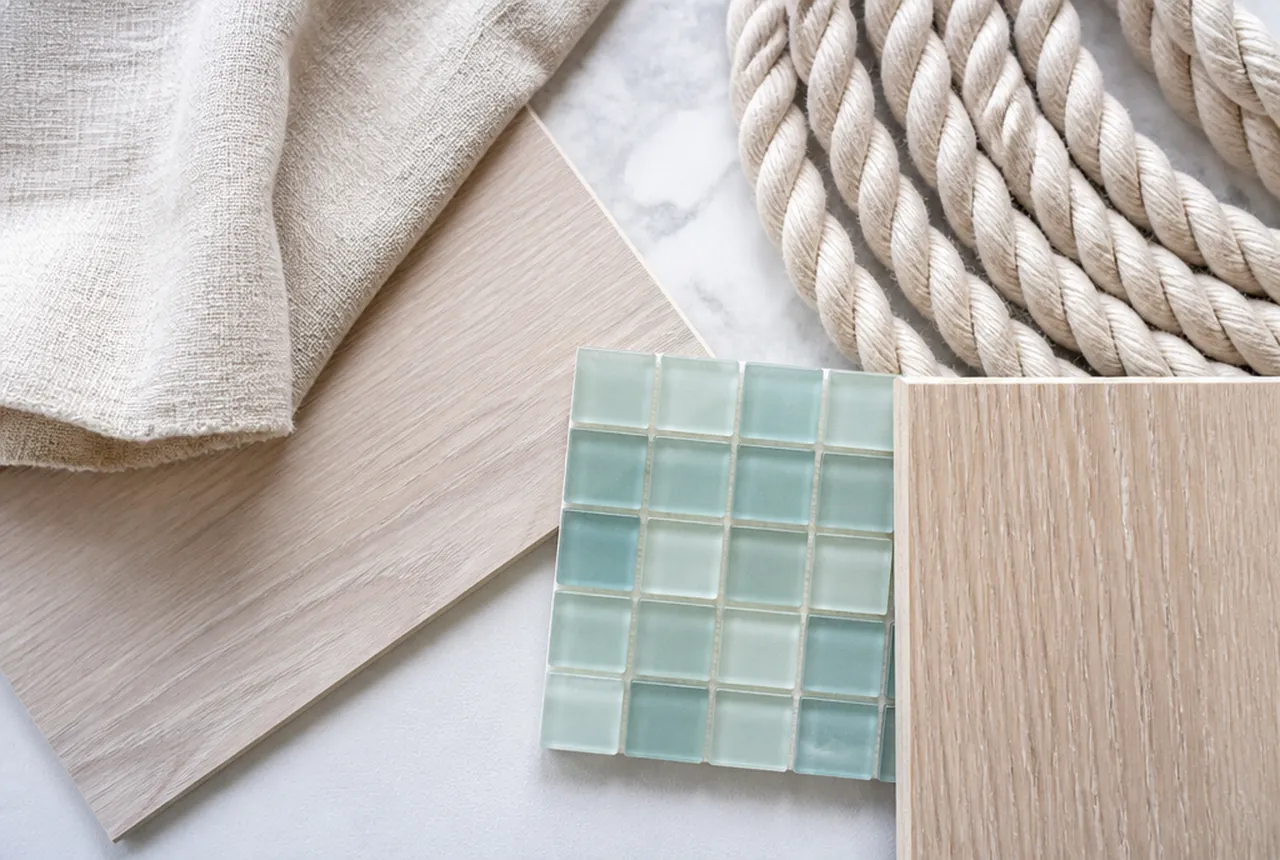
A coastal palette gets specified for its lightness and is then asked to survive the harshest environment in the portfolio. Ultraviolet light fades pigment, salt air attacks unprotected metal, chlorine and sunscreen strip topcoats, and natural woven fibres absorb humidity and lose their structure. Pale colours also make sunscreen transfer highly visible, which is a cleanability problem long before it is a durability one.
Write into the spec: a high colorfastness to light requirement across the textile package, solution dyed synthetic yarns wherever the material sits in or near an exterior or pool adjacent zone, ASTM B117 salt spray hours on metal components, and a confirmation that any natural or woven material named on the board is rated for the humidity of its position rather than assumed to be.
15. The boutique palette board
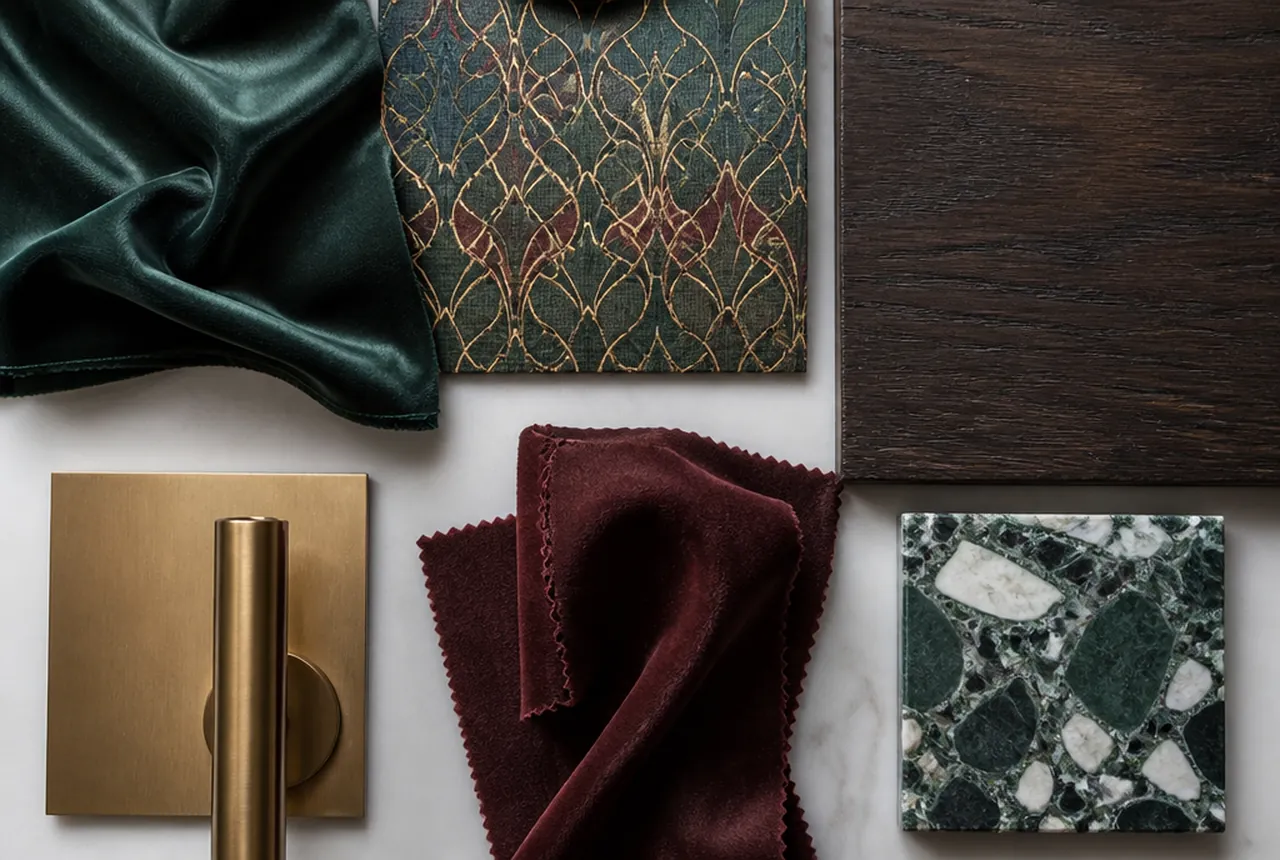
Boutique palettes take the most risk, because they lean on small run mills, one off items, and decorative textiles that were never developed for contract use and therefore carry no performance data at all. The procurement exposure is twofold: a material that cannot document its flame performance, and a finish only one small vendor can produce, which leaves the project with no substitution route if that vendor slips. Flammability is where this becomes a compliance issue rather than a durability one. Upholstered components commonly have to meet the smolder resistance requirement of California Technical Bulletin 117-2013, with the cigarette ignition resistance of components classified under NFPA 260 and its companion mock-up test NFPA 261, and some occupancies additionally require a full scale open flame test on finished seating. The wider standards map is set out in contract furniture standards explained.
Write into the spec: documented test data for every covering including decorative ones, a barrier or backing where a decorative fabric needs help to meet the flame requirement, an explicit designation of which items are low use accents and which are held to full contract standards, and a named alternate for any finish that depends on a single small supplier.
Reading a board as a procurement document
The value of assembling a board is that it forces the palette to be judged as one system rather than as a list of pretty individual choices. A textile that passes abrasion but fails colorfastness, a metal finish that no two vendors will match, a quartz worktop placed in direct sun, or a decorative fabric with no flame data are all invisible on a specification sheet read line by line and obvious the moment the materials sit side by side. Every approval on a board should end the same way: a numbered control sample retained, the standard and threshold written down, and the responsible party named. That is what converts a materials board from a presentation into a document a purchase order can safely reference.