Conversation groups
Review how the chairs face one another and whether the low tables serve the seated guests.
HOSPITALITY FURNITURE / WASHINGTON
Compare the furniture for conversation and occasional work before finalizing a Washington hotel’s public-space package. Connect lobby, lounge, dining and meeting pieces through useful settings and a clear sample review.
Discuss your furniture projectSeattle & Bellevue · Tacoma · Spokane · Vancouver
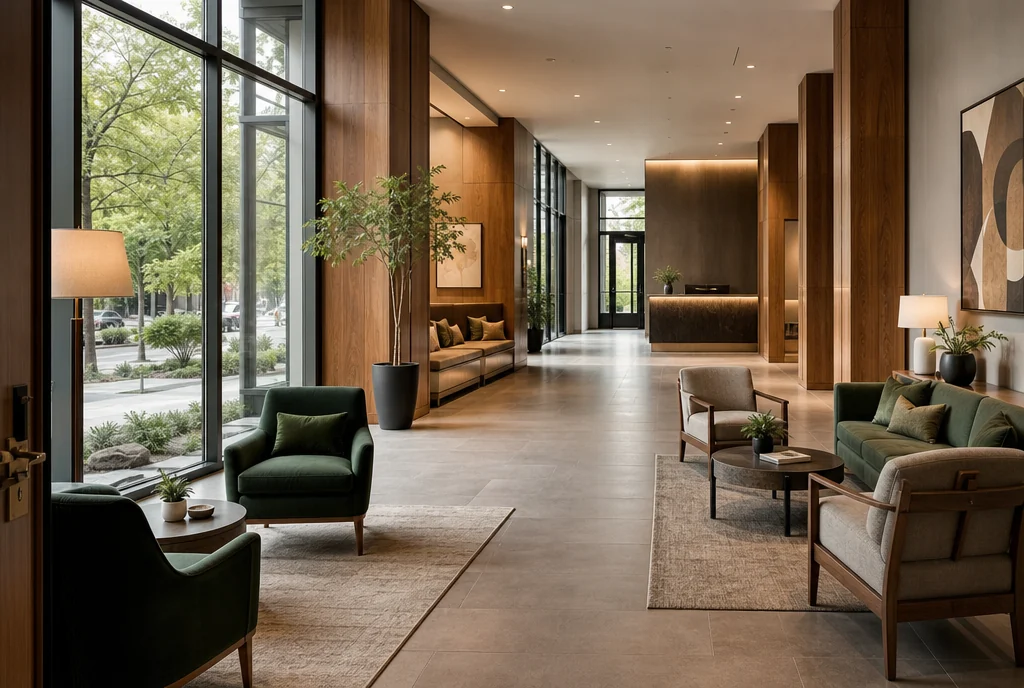
PLAN THE PROPERTY
A lounge advertised for several uses needs more than one seating description. For a Seattle, Bellevue, Tacoma, Spokane or Vancouver hotel, compare a conversational group with an upright work-height setting using the actual proposed chair and table samples. Test how a guest reaches the surface, where belongings sit and how the occupied group affects circulation before deciding which furniture quantities belong in the package.
Review how the chairs face one another and whether the low tables serve the seated guests.
Try the proposed upright chair with the real table surface and the task the property expects to support.
Bring an existing chair or its verified dimensions into the comparison before treating a new table as a match.
A WORKING FURNITURE DECISION
Use the proposed samples, a measured room plan and the tasks your property intends to support. Record the findings beside each chair-and-table pairing.
| Check | Conversation group | Occasional-work group |
|---|---|---|
| Seating position | Can guests face one another comfortably in the proposed arrangement? | Does the upright chair suit the task at the proposed table? |
| Reach and surface | Can each seat use a nearby table for a drink or small item? | Is there a usable work surface without pulling the chair into the main route? |
| Occupied footprint | Check the group with chairs in use, not only pushed back into the drawing. | Allow for the guest using the table and any belongings beside the seat. |
| Purchase record | Save the approved chair, low-table references and number of groups. | Save the approved upright chair, work-table references and number of settings. |
If retained furniture is included, test it in the setting. Recheck the pairing when a proposed substitution changes the dimensions or table relationship.
01 / LOBBY & ARRIVAL
Identify whether a waiting guest needs a small occasional surface or whether the arrival area is also expected to support work. Keep those needs separate in the sample review. A low table that serves a short wait is not automatically a useful work surface. Check the occupied furniture group against the entrance and reception route before increasing its quantity.
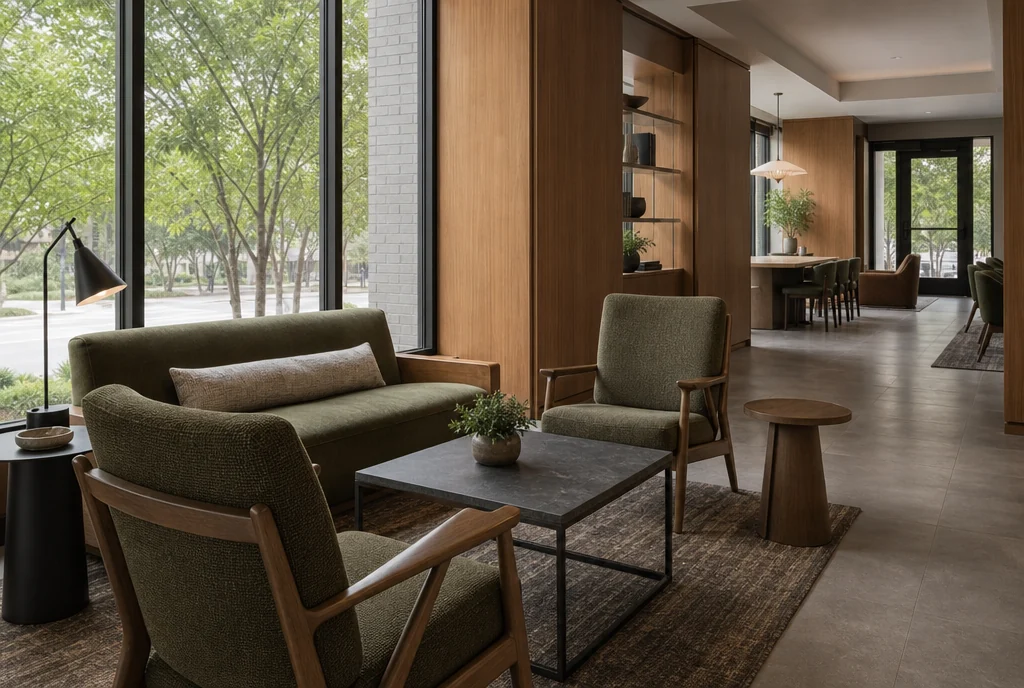
02 / THE GUEST LOUNGE
Set up the conversational and work-height groups side by side during the sample review. Sit in each proposed chair, use the surface for the intended task and note whether the chair has to move into the circulation route to reach it. Record the approved chair-and-table pairing as a group, with separate quantities for conversation and work settings instead of one undifferentiated lounge-seat total.
Include lounge furniture in your inquiry ↗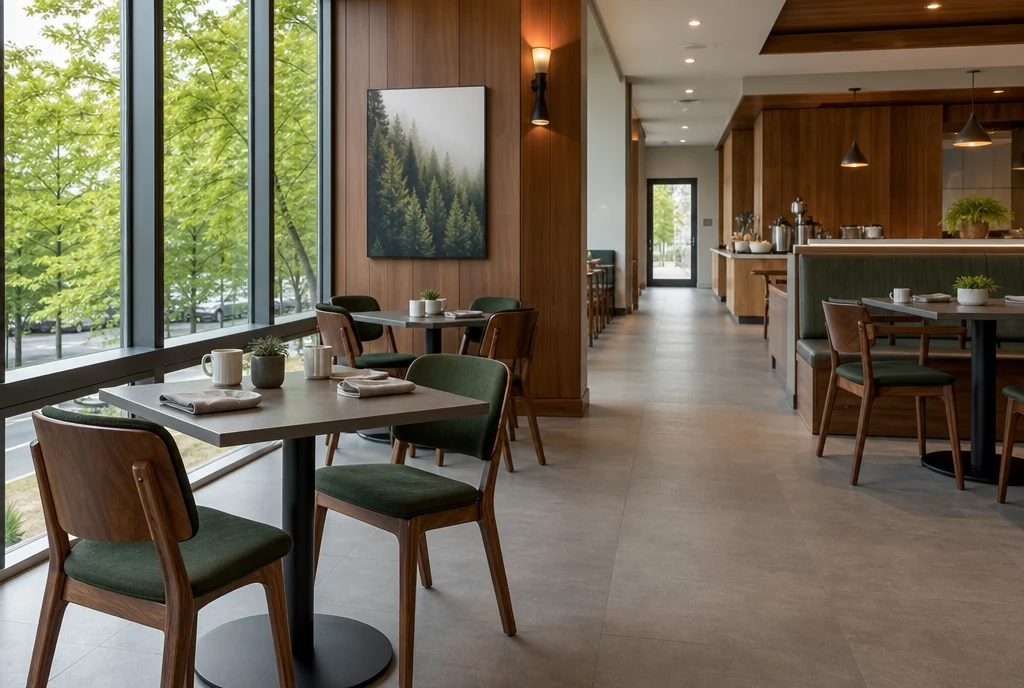
03 / DINING & BREAKFAST
If breakfast furniture is expected to support daytime work, include that setting in the same practical review. Test the dining use with a full place setting, then clear it and check the work task on the proposed surface. Record any compromises or different furniture needed rather than assuming that a table described as multipurpose will satisfy both arrangements.
Include dining furniture in your inquiry ↗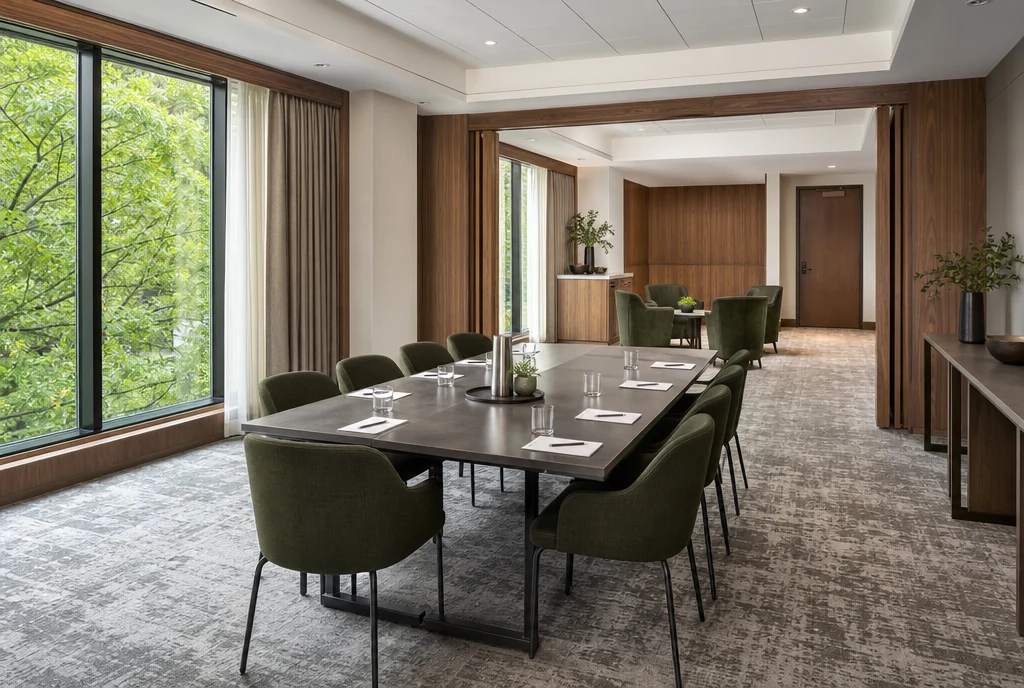
04 / MEETING & PRE-FUNCTION
Keep meeting-room furniture separate from the informal work group tested for the guest lounge. The number of seats, surface arrangement and reset method may differ even when finishes match. Review the proposed meeting chair and table together, then identify the quantities dedicated to that room so the approved lounge settings remain available for their intended guest use.
Turn the room list into furniture quantities ↗BEFORE THE QUOTE
Review the actual chair-and-table pairings against their intended tasks. Check seating position, table reach, usable surface and the occupied footprint. Include retained pieces in the trial where relevant, then record separate approved settings and quantities instead of assuming one lounge-chair specification covers both uses.
For pricing, include quantities, proposed finishes and the property location. Confirm current product options, lead time, delivery and assembly scope in the quotation for your actual order.
Prepare a clearer request for quotation ↗YOUR WASHINGTON PROPERTY
Send the public-room plan and the results of the conversation-versus-work sample comparison. Identify the approved pairings, quantities by setting, retained furniture and unresolved choices. Add the property location, timing and receiving information. That gives the quotation a clearer target than a general request for lounge chairs suitable for everything.
Share what you want to furnish. We’ll discuss your requirements and help work through furniture sourcing options for your property.
Start with a room-by-room schedule ↗PLANNING ELSEWHERE?